Table of Contents
The year 2026 was anticipated to mark the point where Wall Street’s massive investments in artificial intelligence would deliver substantial financial returns. Instead, the market has entered a period of sharp volatility, raising fresh questions about the sustainability of the sector’s valuation as major firms move toward public listings.
During the first half of the year, artificial intelligence equities reached record levels following strong earnings from major hyperscalers including Google’s parent company Alphabet, Meta, and Microsoft. Industry leaders OpenAI and Anthropic both outlined plans for initial public offerings, coming on the heels of SpaceX’s public debut in June, which briefly elevated Elon Musk to trillionaire status. At the same time, AI models demonstrated significant progress in performing complex tasks.
Market Volatility and Executive Resignations
Market conditions shifted dramatically in the second half of 2026. Although semiconductor manufacturer Nvidia reached new peak share prices last month, stock values across hyperscalers and hardware suppliers began to fluctuate widely. Following the midterm elections in the United States, in which Democrats gained control of Congress, technology stocks experienced a steep decline, wiping out more than $1 trillion in valuation from major tech companies—including Meta, Apple, Amazon, and Tesla—in a single session.
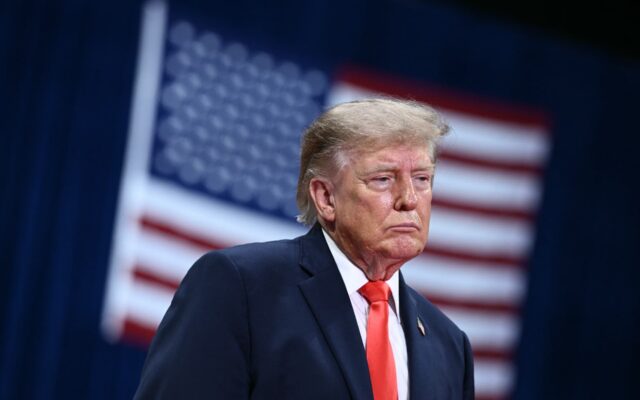
The sector faced further disruption when Nvidia stock plunged nearly 10% over two trading sessions. The drop occurred after revelations that Nvidia’s board and the FBI were investigating CEO Jensen Huang over his ties to a woman suspected by US intelligence agencies of being a Chinese spy. On Thursday, Huang resigned from the company following reports of a second alleged affair, which triggered additional declines in Nvidia’s share price.
Mounting Capital Expenditures and Revenue Gaps
Financial analysts are expressing increased caution regarding the scale of capital expenditure in artificial intelligence infrastructure. Investment bank Goldman Sachs estimated in September that hyperscalers require approximately $300 billion in annual revenue related to AI to break even on current spending, pointing to an estimated revenue gap of nearly $230 billion. Goldman Sachs further projects that capital expenditures will rise from roughly $800 billion this year to $1.2 trillion in 2027 and $1.4 trillion in 2028.
Dennis Dick, chief market strategist at Canada-based Stock Trader Network, told DW that investor expectations have changed significantly. “We’re not in Kansas anymore,” Dick told DW, adding that investors are now telling tech companies to “Show me the money.”
Conversely, Kit Rees, an investment strategist at London-based Quilter, told DW that the recent market decline represents a “healthy correction” rather than a bursting bubble. “We’re still in the very early innings of the AI build-out,” Rees told DW. “There’s still a lot of excitement around this technology and investors will want to have a slice of the pie.”
Anthropic Advances IPO Plans Amid Market Downturn
While OpenAI opted to push its planned public listing into next year, Claude developer Anthropic is moving forward with its IPO scheduled for later this month. The company announced plans to offer 825 million shares priced between $70 and $78 per share. Although Anthropic previously aimed for a valuation exceeding $2 trillion, its target has been adjusted to between $1.2 trillion and $1.3 trillion.
Dick questioned the timing of the launch during a period of market turbulence. “Is this the best timing?” he asked in comments to DW. Dick noted that while a $1.3 trillion valuation might align with Goldman Sachs’ long-term forecast of $600 billion in revenue by 2030, “when you’re talking about a company with currently $52 billion in revenue, it sounds like it’s overvalued.”
Other market participants retain a more optimistic outlook. Vivek Seth, chief executive officer of Shaires Holdings, told Bloomberg that “Anthropic is a once-in-a-generation company,” adding that “Its IPO will establish a market-clearing valuation as conditions stabilize.”
Regulatory Pressures and Credit Conditions
Analysts are monitoring several key indicators to assess the trajectory of the market, including corporate revenue growth, financing arrangements, and regulatory developments. Debt markets are showing signs of rising costs for infrastructure providers such as CoreWeave and Oracle. CNBC reported that the cost of insuring Nvidia’s debt against default jumped 76% within a single month.
Referring to Oracle’s spending patterns, Dick told DW, “They [Oracle] have been spending, some people say, like drunken sailors,” adding, “They’ve compromised their balance sheet to a point where the stock’s fallen 65% from the highs.” Despite these market pressures, Oracle, Meta, Microsoft, and Alphabet have collectively issued $67 billion in new AI-related bonds since late last month.
Regulatory scrutiny is also expanding at the state level. Following temporary halts on data center approvals in New York and Texas during the summer, Texas Governor-elect Gina Hinojosa has proposed legislation to prevent the high electricity and water consumption of data centers from increasing consumer utility rates.
Economic historians continue to debate the timing of potential market corrections. In his forthcoming book, “AI Mania: Blather, Bluster, and the Bubble of All Bubbles,” economist Gary Smith compares current AI investments to historical speculative cycles in railroads, automobiles, television, and the internet, warning of a potential severe downturn. Meanwhile, Joachim Klement, head of market strategy at Panmure Liberum, told Bloomberg that a market adjustment could occur within the next two years. “My core conviction is that the AI bubble will either burst in 2027 or in 2028, so sometime in the next two years,” Klement told Bloomberg.