Table of Contents
Adobe has unveiled its latest experimental features at its annual Max conference, showcasing tools that can transform flat images into explorable 3D environments, design animated characters through conversation, and streamline photo and audio editing.
Interactive AI Characters and 3D Photos
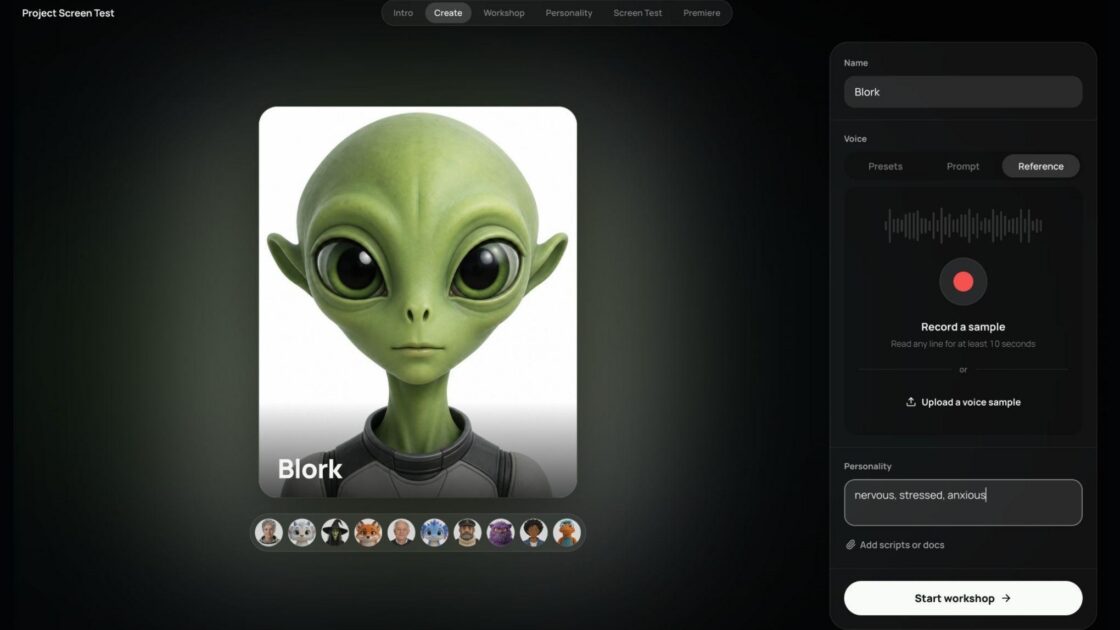
Among the new concepts is Project Screen Test, a tool aimed at simplifying the development of AI-generated characters for video content. Instead of relying solely on text prompts, users can converse with a character in a FaceTime-style environment to establish personality traits, backstories, flaws, and movement quirks, before generating animated screen tests in specific scenarios. According to The Verge, this standalone exercise addresses the limited creative control often found in AI video generation compared to traditional animation.
Another project, Sight Span, converts flat images—including paintings, illustrations, and photographs—into 3D environments that users can navigate and reposition. The technology generates unseen objects and backgrounds outside the original frame while preserving artistic styles, facial features, and tattoos. Although the initial 3D visuals appear pixelated, the resolution is restored once a specific angle is selected.
Audio Mixing and Photo Editing Experiments
Project Sound Bender introduces an AI audio mixing capability that allows users to customize sound effects using a visual color wheel canvas. After uploading a video clip and entering a text prompt, creators can drag a cursor across a square canvas to adjust and blend different AI-generated noises in real time, with the system automatically syncing the audio to the video.
Additionally, Adobe showcased Project Rinse Repeat, a Photoshop-integrated feature that copies specific edits and applies them to other people or objects within the same image. Whether duplicating blemish touchups across a group of people or adding customized shadows to various marketing products, the tool recreates the adjustments using native Photoshop functions to keep them fully editable.
The Future of Creative Workflows
These technology previews, known as sneaks, highlight potential future capabilities for Adobe’s Creative Cloud applications and Firefly platform, though their official release is not guaranteed. As Adobe relies more heavily on generative AI for its growth strategy, these features point toward a shift in how creative professionals might approach complex production tasks.
Senior principal Adobe research scientist Gautham Mysore told The Verge that making these interactions more intuitive ultimately aims to provide experienced professionals with finer precision. Tools like Sound Bender and Sight Span demonstrate how creators can apply their professional judgment to refine outcomes more directly, bridging the gap between creative intent and execution.