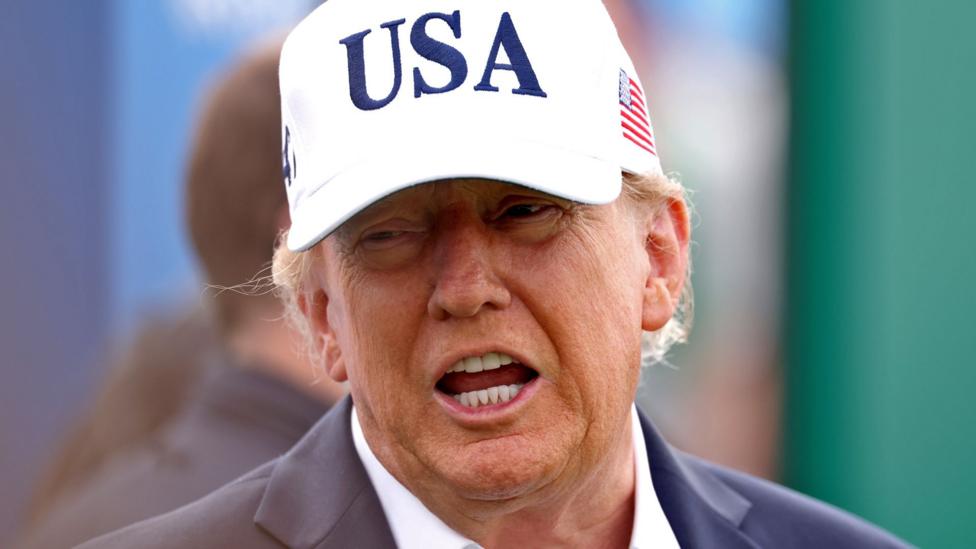
US President Donald Trump stated that the FBI is investigating the affair between Nvidia Chief Executive Jensen Huang and an alleged Chinese spy. Trump mentioned he spoke with Huang on Monday following reports that US officials believe the executive was targeted in a Chinese espionage campaign.
FBI Investigation and White House Reaction
Speaking at a White House press briefing, Trump told reporters, “I know the FBI is looking into” the affair, though he did not provide further details about the inquiry or confirm when it began. Trump added that he believes Huang is an “honourable guy and I feel very confident that he will be in good shape” after the investigations conclude. When asked about when he learned of the relationship, Trump stated he was informed “over a period of time” without being specific.
The FBI declined to comment when contacted by BBC News. Meanwhile, Beijing has rejected the claims that Huang was targeted, with its foreign ministry calling the allegations entirely groundless, speculative, and intended to malign China.
US intelligence officials believe Alice Huang, also known as Huang Le and who is not related to the Nvidia boss, operated as a spy for Beijing, as reported by The New York Times. The newspaper noted that Secretary of State Marco Rubio sent a memo to top Washington officials in the spring warning that the Nvidia chief was in a close relationship with a Chinese spy. Alice Huang served as managing director of Megaspeed, a Singaporean company with business dealings with Nvidia. A staff member at Megaspeed’s Singapore office directed inquiries to the company’s PR team, and BBC News has emailed Megaspeed for comment.
Nvidia’s Response and Market Impact
Nvidia commissioned an independent investigation into the affair and stated it has no reason to believe national security or company secrets were compromised. Nvidia shares dropped by more than 4% on Monday, wiping about $250bn off the company’s market value. As the world’s second most valuable company after Apple, Nvidia designs specialized computer chips that drive the global artificial intelligence industry.
Huang admitted he was unfaithful to his wife and apologized for hurting his family. He stated on Monday that he remains committed to protecting Nvidia and supporting American national security, and that he will cooperate with the company’s internal investigation. Additionally, Huang and Nvidia face a proposed class action lawsuit filed in California on Monday, which accuses them of defrauding shareholders by concealing his relationship with the suspected spy who allegedly sought to help smuggle Nvidia products to China.
Huang has also received a request to appear at a joint closed-door briefing with congressional committees next week to discuss Nvidia’s security protocols against foreign espionage and his interactions with Alice Huang, though it remains unclear if he will attend. At Nvidia’s Santa Clara headquarters, workers told BBC News that it remained business as usual despite the intense media attention.
Nvidia exports to Beijing remain a major national security focus in the technological rivalry between the US and China. While the Trump administration previously restricted advanced products like the H200 semiconductor to prevent giving China a technological edge, the administration announced in January that it would allow sales of H200 chips to Chinese customers under specific conditions, while the most advanced semiconductors like the GB200 Blackwell super chip stay blocked.