Table of Contents
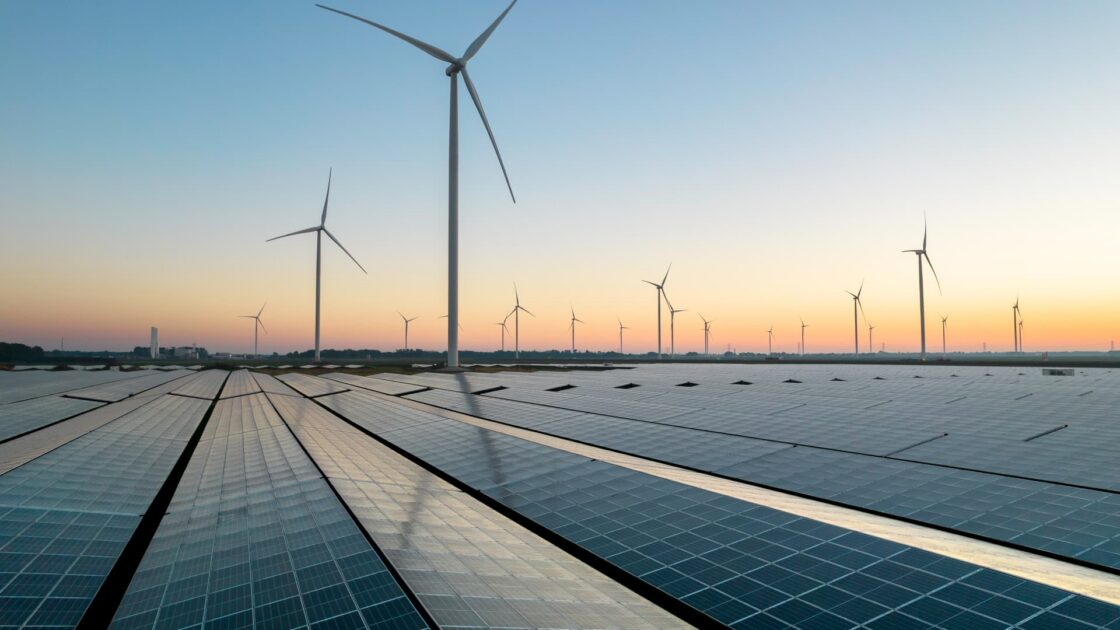
The renewable energy sector continues to experience robust growth and surging investments across the United States, driven by significant manufacturing expansions and strong utility-scale demand. According to reports from the CIM, domestic manufacturing capacity for solar modules, wind blades, and nacelles grew by approximately 50% in the third quarter of this year compared to the first quarter of 2025 as new facilities commenced operations.
Investment Resilience and Tax Credit Shifts
Over the past four quarters, the country witnessed $277 billion invested in manufacturing and deploying renewable energy, non-fossil fuel vehicles, building electrification, and carbon-management technology. Hannah Hess, director of energy and climate at Rhodium, noted that utility-scale investments in solar and storage remain consistently strong, particularly as project deadlines to qualify for tax credits have shifted.
Hess pointed to provisions within the One Big Beautiful Bill Act, which accelerated sunsets and federal clean energy tax credit deadlines relative to the timeline established by the Biden administration’s Inflation Reduction Act. To claim standard investment or production tax credits, solar and wind projects were required to begin construction by July 4 of this year or enter service by December 31, 2027.
Despite the Trump administration’s efforts to rescind a substantial portion of the $1.6 trillion allocated for clean energy under the Bipartisan Infrastructure Law and the Inflation Reduction Act, a Politico analysis indicates that nearly $600 billion remains accessible. Roraj Pradhananga, chief investment officer at impact advisory firm Veris Wealth Partners, stated that long-term investment views on clean energy remain unchanged despite legislative rollbacks. Pradhananga emphasized that, independent of tax credits, shifting toward renewable energy makes strong economic sense over the long term when considering the volatility and risk-adjusted returns of traditional energy.
Data Center Expansion and Environmental Concerns
The rapid proliferation of artificial intelligence data centers emerged as a prominent issue during the midterm elections, with voters in 10 states considering 41 local initiatives. These proposals included complete bans on new construction, pauses on active and planned facilities, and strict energy consumption limits, with all but one initiative passing. Furthermore, newly elected governors in Ohio, Texas, and Georgia campaigned on platforms critical of data centers, though they have stopped short of demanding permanent bans.
Texas Governor-elect Gina Hinojosa highlighted the need for laws to protect residents and paused data center developments until proper safeguards are established, echoing a cautious regulatory approach similar to Pennsylvania Governor Josh Shapiro’s executive order issued in August. For AI companies, these developments may result in slower facility construction, heightened community involvement, and self-financed utility usage, though long-term expansion plans remain intact.
Goldman Sachs reported that growth projections through 2027 remain largely unaffected, forecasting data center power demand to increase by 38%, or 12 gigawatts, in 2026 and another 38%, or 17 gigawatts, in 2027. Representatives from OpenAI and White House economic advisor Kevin Hassett affirmed that investment plans and scheduled data center developments will proceed largely unaffected by local ballot measures.
Clean-Tech Financing and Future Outlook
The environmental challenges posed by AI data centers could ultimately benefit the renewable sector by accelerating clean energy demand and research funding. Adam Wolfensohn, a clean-energy investment advocate and advisor, highlighted promising infrastructure opportunities in advanced fusion ventures, floating offshore wind turbines, and solar-plus-storage operations as technologies become increasingly cost-effective.
Additionally, climate-tech venture capital reached $26 billion in the first half of 2026, marking a 55% year-over-year increase according to market-intelligence firm Currence. Organizations such as the Global Impact Investing Network continue to support this growth by introducing frameworks to help investors navigate climate solutions and ensure measurable environmental impacts.