Table of Contents
Although ballots remain uncounted from the US midterm elections, political attention has already shifted toward the 2028 presidential race to succeed President Donald Trump. Buoyed by major gains in Congress, Democrats hold significant momentum, though history shows midterm success does not guarantee a future White House victory.
Big winners in the midterms now have momentum
Several prominent potential presidential candidates competed in the 2026 midterms, with several emerging in strong positions. Georgia Democratic Senator Jon Ossoff secured a sizeable victory in a competitive state won by Trump in 2024, boosting his national profile despite previously denying presidential ambitions. Pennsylvania Governor Josh Shapiro easily defeated his Republican challenger, with analysts viewing his broad appeal in a crucial swing state as evidence of national competitiveness. Illinois Governor JB Pritzker also won following a campaign that local pundits viewed as preparation for a presidential run. Meanwhile, Arkansas featured two potential Republican 2028 contenders: Senator Tom Cotton and Governor Sarah Huckabee Sanders, a former Trump administration press secretary, both retained their offices by narrower margins than before in the conservative state.
JD Vance and Trump’s allies under pressure
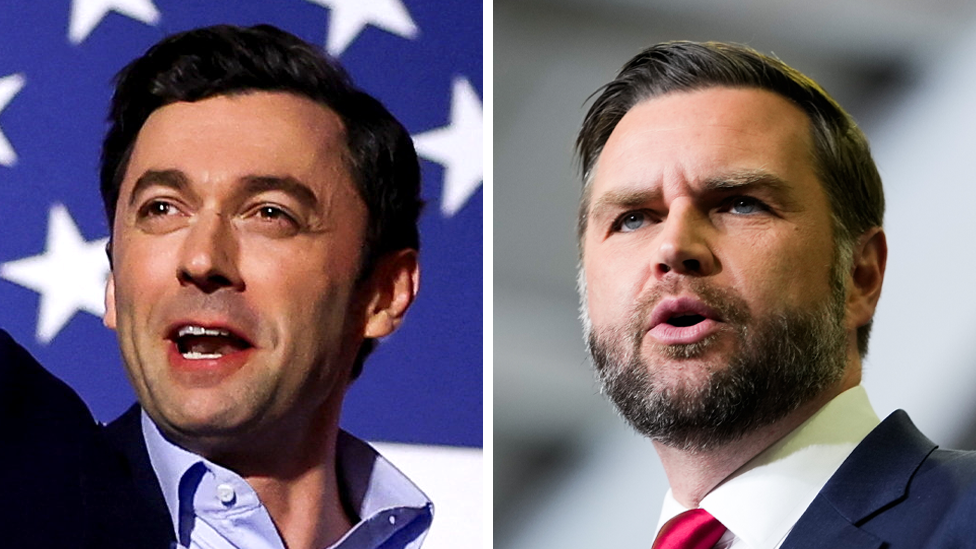
Exit polls indicate that voter anger regarding Trump administration actions contributed to the swing against Republicans, presenting challenges for potential successors within current leadership, including Vice-President JD Vance and Secretary of State Marco Rubio. Karen Beckwith, a political science professor at Case Western Reserve University in Ohio, told BBC News that Vance was the individual hurt most severely by the campaign. Vance attempted to distance himself from the defeat and a politically disastrous foreign policy adventure in Iran, writing on X that the war caused their loss. Rubio denied reports that he might leave his position ahead of a presidential run. Other prospective Republican candidates not part of the administration offered critiques and strategies for the future, including Senator Ted Cruz, Florida Governor Ron DeSantis, and former New Jersey Governor Chris Christie, who bluntly stated that the Trump era has ended.
Left and centre Democrats in fight for future
Both centrist and left-wing factions of the Democratic Party claimed victory from the results as dozens of potential 2028 contenders make early moves, according to former Obama adviser Jim Messina, speaking to BBC News. In Michigan, El-Sayed secured a breakthrough victory for left-wing Democrats in a swing state, prompting supporters to argue it will supercharge progressive candidates in 2028. Adam Green, co-founder of the Progressive Change Campaign Committee, told BBC News that old notions of electability are gone and that figures like New York Democratic Representative Alexandria Ocasio-Cortez can now enter primaries knowing they can win. Conversely, moderate Democrats also celebrated nationwide gains, with the centrist “Blue Dog Caucus” nearly doubling its size by adding at least 14 congressional seats. This success led moderates to conclude that pragmatic candidates willing to work with conservatives can successfully woo Republican voters, with an economy-first approach likely remaining central due to voter focus on cost of living issues.
Support of Hispanic voters must be earned
Both political parties must navigate a changing map and shifting support coalitions for 2028, as traditionally safe regions can no longer be considered strongholds. Texas now retains only one statewide Republican, leaving its 40 electoral college votes potentially up for grabs. Christina Pascucci, a political commentator and CEO of Atlas Global, told BBC News that the midterms challenge political assumptions and demonstrate that neither party can take strongholds or swing voters for granted. Furthermore, the Trump coalition of working-class and Latino voters faltered after gains made during the 2024 campaign. Driena Sixto, a former conservative political commentator and spokesperson for Turning Point USA, told BBC News that Republicans must alter their messaging to Latino voters before 2028 to reverse the trend, noting that post-election White House messaging heavily emphasized deportations rather than safe communities and fighting trafficking.