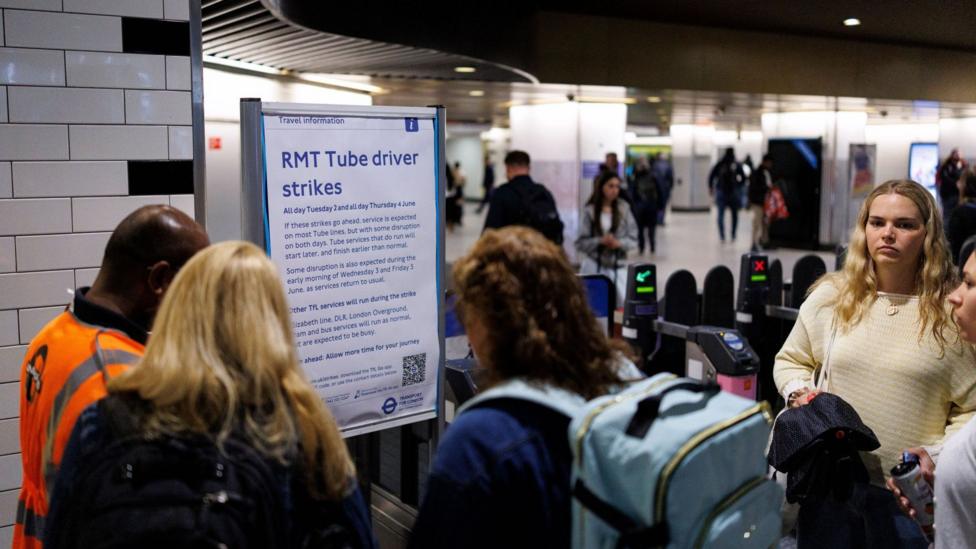
London Underground drivers are set to hold a series of 24-hour strikes as part of a long-running dispute over working conditions, the Rail, Maritime and Transport (RMT) union has announced. The industrial action is scheduled to begin on 26 November, with further walkouts planned throughout December, January, and February.
Dispute Over Working Arrangements
The strikes are in response to proposals from Transport for London (TfL) to modify working conditions, which include the introduction of a four-day working week. The RMT union argues that the plan would force drivers to work longer, more unpredictable shifts and spend more time operating trains. General secretary Eddie Dempsey stated that the union views the proposal as a “wholesale attack on drivers’ working conditions” that could lead to hundreds of job losses.
Conversely, TfL maintains that the changes are voluntary and would result in drivers working fewer hours overall. Nick Dent, director of customer operations for London Underground, explained that the offer provides staff with a “real, meaningful choice” regarding their working patterns without requiring them to change their depot. TfL noted that drivers who choose to remain on a five-day week would be guaranteed their current location.
Differing Union Perspectives
While the RMT opposes the current proposal, the Aslef union, which also represents a significant portion of the network’s drivers, has expressed surprise at the strike action. Aslef organiser Finn Brennan noted that the voluntary four-day week would grant drivers an additional 35 days off per year, based on a 34-hour week. He described the strike as a “strange choice,” emphasizing that management has agreed that those who prefer to keep their five-day schedule will not face any detriment.
Under the TfL proposal, most drivers would see their working week reduced from 36 hours to 35 hours, with the introduction of paid meal breaks keeping contractual hours consistent. The RMT, however, is pushing for a 32-hour week over four days, which would involve working three fewer hours per week for the same salary.
Impact on London
The upcoming industrial action follows a series of strikes earlier this year that caused significant disruption across the network, leading to the closure of several lines. As reported by BBC London, the dispute has become a persistent issue, with both sides remaining at an impasse despite ongoing negotiations.
Business groups have expressed concern regarding the potential economic impact of the walkouts. Ed Richardson, transport programme director at BusinessLDN, stated that the strikes would likely affect the hospitality sector during the busy Christmas period. He urged both parties to reach an agreement urgently to avoid the disruption.
The planned strike dates are 26 November, 17 December, 19 December, 4 January, 6 January, 17 February, 23 February, and 25 February.