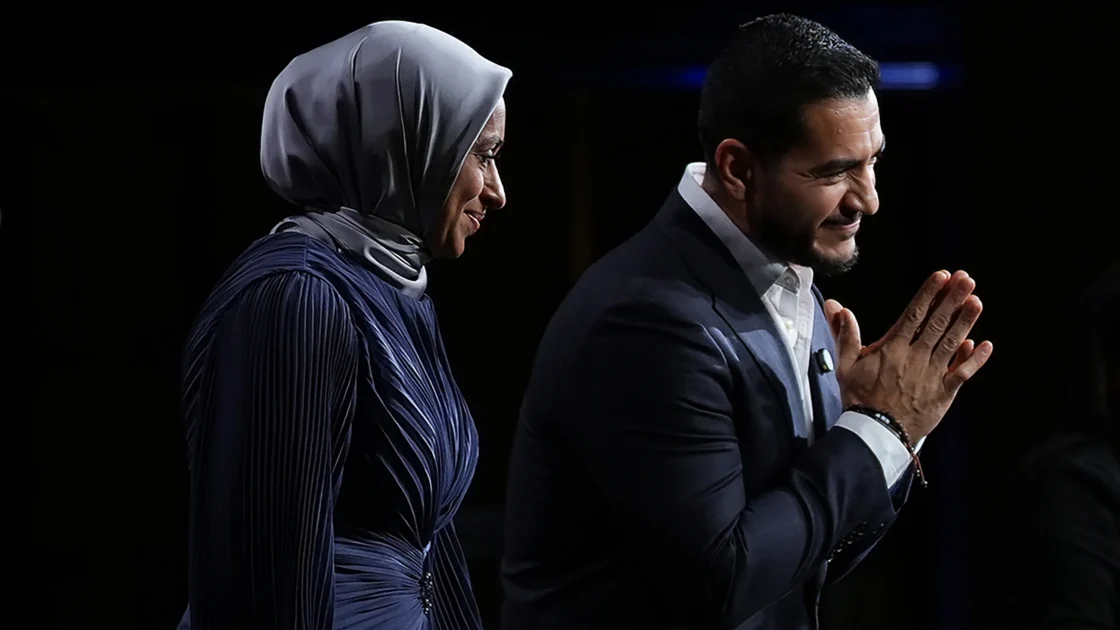
Democrat Abdul El-Sayed made history in Michigan by defeating Republican Mike Rogers to win a U.S. Senate seat as his party reclaimed control of Congress. The 42-year-old former public health official campaigned on reducing costs, implementing Medicare for All, and removing corporate money from politics.
Campaign Divisions and Policy Positions
Mike Rogers, who was backed by President Trump, repeatedly targeted El-Sayed over his Muslim faith and his opposition to U.S. military aid to Israel. The war in Gaza and U.S. policy toward Israel emerged as a central dividing line throughout the race. The dispute grew intense when Haley Stevens, whom El-Sayed defeated in the Democratic primary, endorsed Rogers just days before the election.
Following a campaign defined by fierce disagreements over the issue, El-Sayed now shares common ground with President Trump. The president announced plans to halt approximately $4 billion in annual military aid to Israel by the end of the year, though he provided no specific details on the implementation of the cuts.
In an interview with NPR’s Morning Edition following his victory, El-Sayed expressed support for the administration’s proposal. “I think the president is actually right on this policy,” he stated, adding that he also wants the U.S. to stop selling weaponry used for actions including genocide and apartheid in Israel. The United States currently provides Israel with $3.8 billion in annual military assistance under a pact scheduled to run through 2028.
Broader Foreign Policy and Voter Relations
El-Sayed’s foreign policy critique extends beyond Israel to question American military assistance for Egypt, Saudi Arabia, Jordan, and Pakistan, arguing that U.S. tax dollars ought to be utilized domestically.
Securing the Michigan Senate seat does not signify the complete resolution of internal party divisions. Prior to the election, NPR’s Michel Martin reported on concerns expressed by certain Jewish and Black voters regarding El-Sayed. Addressing whether additional effort is required to earn their backing, El-Sayed pointed to the election outcome as a counter to that narrative, noting that ongoing dialogue and community building remain essential.
The digital version of the report was edited by Treye Green.