Table of Contents
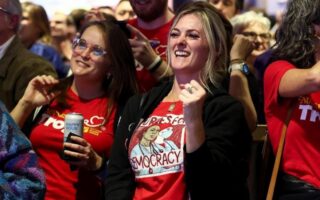
Democratic candidates won majorities in both the US Senate and the House of Representatives during the midterm elections, creating a divided government for the remaining two years of President Donald Trump’s term. Voters cited economic conditions as their primary concern when casting ballots across the nation.
Market Reactions and Forecasts of Legislative Gridlock
Global financial markets rallied following an initial downturn as investors processed the election results. However, analysts expect minimal legislative progress over the next two years. Trump has already described himself as “Mr Veto,” signaling his intention to block bills proposed by the new Democratic majorities in Congress.
Stephen Brown, chief North America economist at Capital Economics, noted that the Democratic gains will not drastically alter near-term federal policy because the party lacks a filibuster-proof majority in the Senate while the president retains veto authority. Meanwhile, Jacob Funk Kirkegaard, a nonresident senior fellow at the Peterson Institute for International Economics, told DW that Washington is entering two years of complete gridlock where nothing will get accomplished.
Investor attention has also focused on potential restrictions on artificial intelligence. Widespread public pushback against data center developments—the core infrastructure supporting AI technologies—helped fuel Democratic campaign victories. Kirkegaard, who is also a senior fellow at the Bruegel think tank, told DW that the election outcome highlights fragile political support for rapid AI expansion, which could complicate local construction efforts and affect valuations for major technology firms. Brown added that a potential Democratic presidential victory in 2028 could eventually bring corporate tax increases and stricter oversight that slows AI deployment.
Pressure Mounts Over Tariffs and International Trade
Public dissatisfaction with trade policy contributed significantly to the election outcome. An October survey by the Pew Research Center revealed that 56% of Americans view Trump’s tariffs as largely harmful to the country, compared to 20% who consider them positive. These sentiments bolstered Democratic candidates in export-heavy states such as Texas, Michigan, Iowa, and Illinois, as well as regions with substantial commercial ties to Canada.
Despite the pushback, experts do not anticipate a shift in administration policy. Deborah Elms, head of trade policy at the Hinrich Foundation, told DW earlier this year that Trump is unlikely to tone down his trade disruptions or tariffs while remaining in office. Although the US Constitution grants Congress authority over trade tariffs, presidential powers established by earlier legislation allow the executive branch to impose duties under national security or emergency declarations. Nevertheless, the newly empowered Congress can initiate legal challenges to prevent further tariff escalations.
Energy Prices and Congressional Oversight Leverage
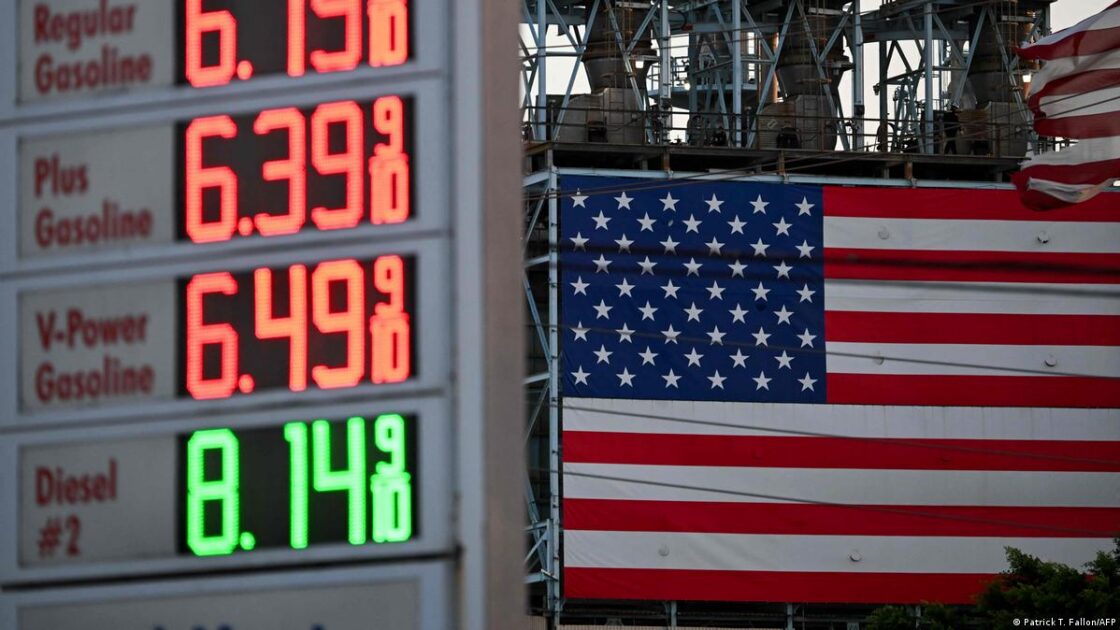
The election defeat could influence the administration’s foreign and energy policies. Trump indicated after the vote that he intends to cooperate with Democrats, having previously stated to the Financial Times that an escalation of the conflict in Iran was unlikely. Reaching a diplomatic resolution with Iran could ease global energy prices and alleviate cost-of-living pressures for American consumers. George Saravelos, an analyst at Deutsche Bank FX Research, observed that financial markets are pricing in lower risks of energy supply disruptions as Middle Eastern oil shipments recover.
Beyond broad economic policy, the Democratic-led Congress is expected to focus on administration conduct. Public concern over corruption and allegations of personal enrichment while in office played a key role for voters. Congressional leaders could launch formal investigations or pursue impeachment proceedings, which analysts suggest might serve as leverage to compel executive compromises on key economic matters, including trade tariffs.