Table of Contents
Israel is heading to the polls on Tuesday in a closely contested election that is being described as one of the most important in its history. The vote marks the first election since the Hamas-led attack of October 7, 2023, and the subsequent war against Palestinians in Gaza, alongside a wider regional conflict involving attacks on Iran, Lebanon, Yemen, Syria, and Qatar.
The Political Landscape and Netanyahu’s Survival
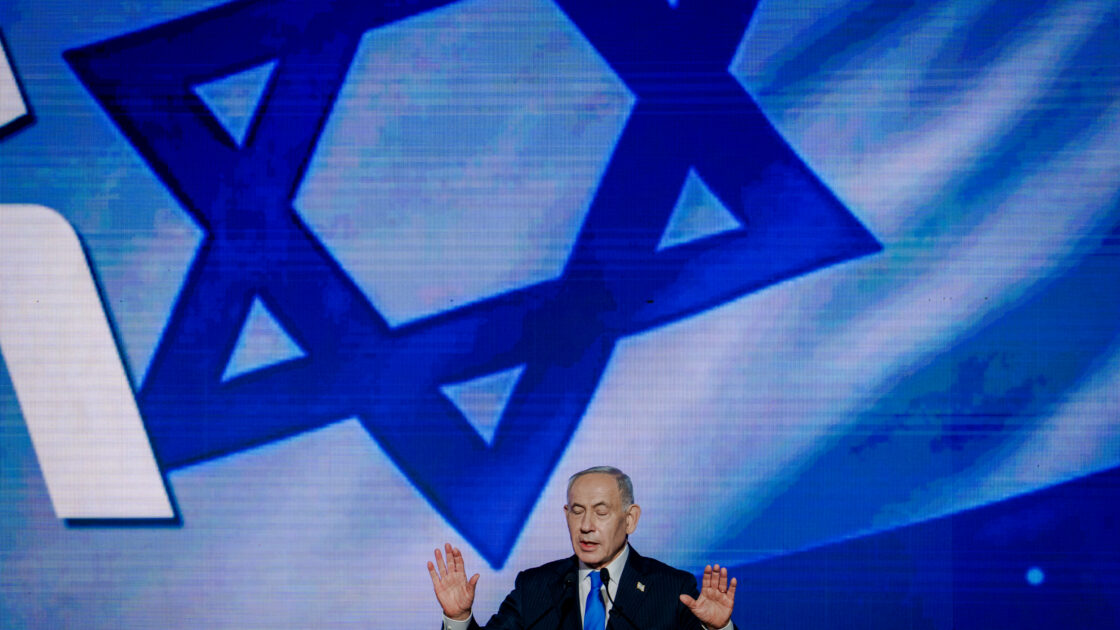
Benjamin Netanyahu, Israel’s longest-serving prime minister, is seeking to extend his tenure after leading the country’s most right-wing governing coalition, which united far-right ultranationalists and ultra-Orthodox Jewish parties. Wanted by the International Criminal Court on charges of war crimes in Gaza and facing a long-running corruption trial, he is fighting for his political survival against a self-styled Zionist opposition bloc that has fundamentally embraced a right-wing approach to Israel’s challenges. Questions over accountability for alleged security failures, disputes over ultra-Orthodox military service, and efforts to exclude Arab-led parties dominated the campaign.
This has further dampened already low expectations that the vote would offer any meaningful improvement to the lives of Palestinians, as deadly attacks continue almost daily in Gaza despite a yearlong ceasefire, while settler pogroms and Israeli army raids have intensified in the occupied West Bank.
Yehouda Shenhav-Shahrabani, a noted Israeli sociologist, told Al Jazeera that the entire Israeli political system operates within the racist framework of Jewish supremacy. He stated that none of the leaders presenting themselves as an alternative to Netanyahu can genuinely be described as left-wing, adding that the reality is rooted in Zionist political thought itself.
Erosion of the Political Center and Judicial Overhaul
The collapse of the peace process with the Palestinians and repeated security crises over the past few decades have systematically eroded the political center and left, giving rise to landmark legislation such as the 2018 Nation-State Law. Analysts agree that the speed of this rightward drift accelerated under the latest Netanyahu government, which faced accusations of attempting to reshape the country through controversial moves.
These included attempts to strip the Supreme Court of its power to review government actions and the flouting of its rulings on conscripting the ultra-Orthodox minority whose political support helped sustain the governing coalition. Figures such as far-right provocateur and National Security Minister Itamar Ben-Gvir and religious Zionist Bezalel Smotrich, Israel’s finance minister, offered crucial support to the judicial overhaul that Netanyahu launched in early 2023, while providing encouragement for the surge in violence across the West Bank.
Ahron Bregman, an Israeli analyst and senior teaching fellow at King’s College London, told Al Jazeera that if Netanyahu loses and figures like Gadi Eisenkot become prime minister, the main initial change will be the atmosphere. Bregman described Netanyahu as a very divisive figure and noted that a new prime minister is likely to calm things down.
Yossi Mekelberg, a senior fellow at Chatham House, told Al Jazeera that the decision facing Israel is ultimately a choice on whether to live in a functioning democracy or a democracy in name only, as well as choosing between maintaining the occupation of the West Bank or annexing it entirely.
Foreign Policy and the Absence of Palestinian Rights on the Ballot
Observers note that the election will not provide an opportunity to challenge a foreign and security policy that has underpinned the killing of more than 74,000 people in Gaza, increased West Bank violence, and multiple wars including one on Iran that choked key energy routes. None of the mainstream candidates have talked about including Arab-led parties in any potential coalition, and rival candidates use references to leaders of Ra’am or the Joint List to denounce each other.
Shenhav-Shahrabani noted that ultra-Orthodox parties would still be welcome in government after the vote by either coalition, while Arab-led parties representing Palestinian citizens of Israel would be excluded. He stated that as long as there is no genuine binational political vision, racism and the systematic restriction of Palestinian rights will remain fundamental features of Israeli society.
Netanyahu’s challengers largely framed their disagreements as questions of competence, timing, and accountability for the alleged failures preceding October 7, rather than challenges to the treatment of Palestinians. Daniel Levy, a former Israeli government adviser, told Al Jazeera that the election cannot be viewed as a referendum on genocide or the treatment of Palestinians because the treatment of Palestinians by the Israeli state and military is a consensus among Zionist parties.
Levy added that differences among the parties primarily rest on whether it is the state’s job to oppress Palestinians or if settler militias also have a significant role to play.