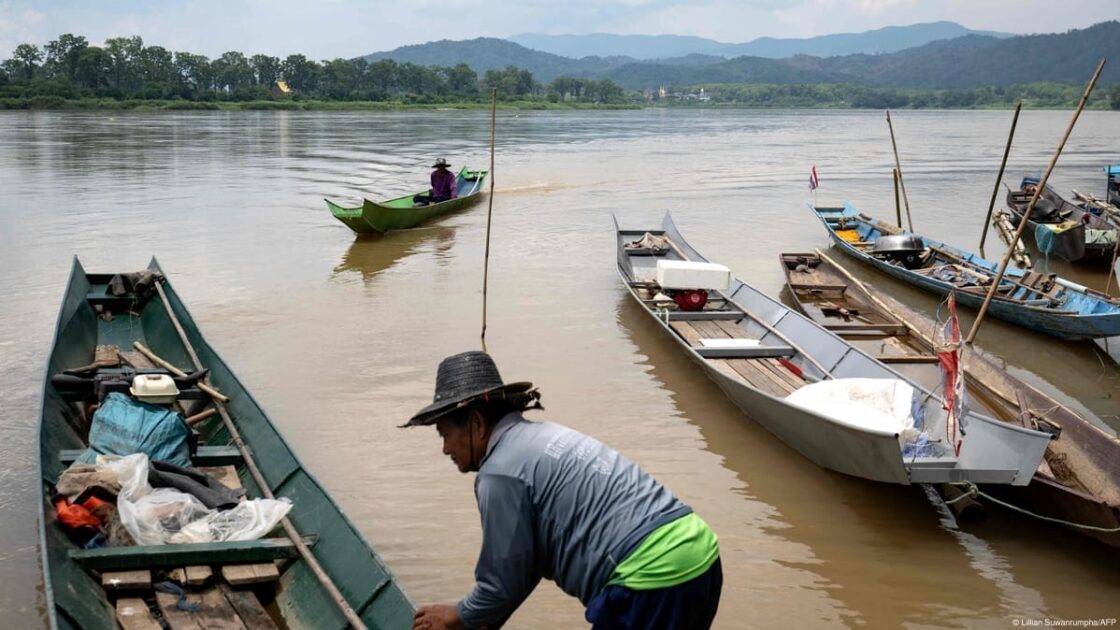
A toxic border river is putting lives and livelihoods at risk in northern Thailand as Bangkok presses Myanmar to tackle unregulated mining. The Kok River, once rich in fish, is now polluted with arsenic, mercury, and other hazardous contaminants driven by mining activity in militia-controlled regions of Myanmar, part of which is fueled by China’s dominant rare earth industry.
Joint Water Sampling and Ongoing Talks
Bangkok hosted the first Thai-Myanmar working group where officials stated that tests proved rare-earth and gold mines in Myanmar were the source of the downstream pollution. China also participated in the talks. Both nations agreed to conduct joint water sampling on the Kok and Sai rivers across 12 locations, with testing expected to begin between December and January. However, no public agreement was reached regarding Thailand’s request for a six-month suspension of mining operations.
The discussions followed the suspension of tap water supplies to 14 villages in the Mae Sai district near the Myanmar border earlier this month, after arsenic levels were found to be nearly 30 times higher than official government limits. Authorities also urged residents this week to avoid consuming certain shellfish and other river species after tests detected dangerous levels of arsenic and lead in northern and northeastern Thailand.
Thai Deputy Prime Minister Yodchanan Wongsawat stated at the joint talks that arsenic does not come from nature and originated from mining sites in Myanmar’s Shan state, adding that no one disagreed with this assessment. Bangkok is also seeking China’s assistance in pressuring private Chinese operators, given its position as the main importer of rare-earth materials from Myanmar, as the crisis grows increasingly urgent.
Obstacles to Stopping Mining Activities
Thanapon Piman, a senior research fellow at the Stockholm Environment Institute (SEI), told AFP that agreeing on the evidence is a necessary first step before moving toward halting mining activities. He added that intervention by Myanmar to stop the mining would be exceptionally difficult, noting that several ethnic armed groups have operated in the region for decades amid an ongoing civil war.
Thai authorities identified two gold mines across the border from Mae Sai as the primary contributors to elevated arsenic levels in the Sai River. The broader region is divided among various factions, including Myanmar’s military and the United Wa State Army, an ethnic armed group closely aligned with China. The main mining belts, including sites in Shan State, currently remain outside the control of Myanmar’s military-backed government.
Deputy Prime Minister Yodchanan told Reuters that Thai authorities are seeking to determine whether the pollutant mines are under the control of Myanmar’s government or other entities. He stated that they want Myanmar to check whether they can control every mine, and if they cannot, Thailand will ask China for help.
A spokesperson from China’s foreign ministry told AFP that Beijing pays close attention to the pollution issue and intends to provide technical support.