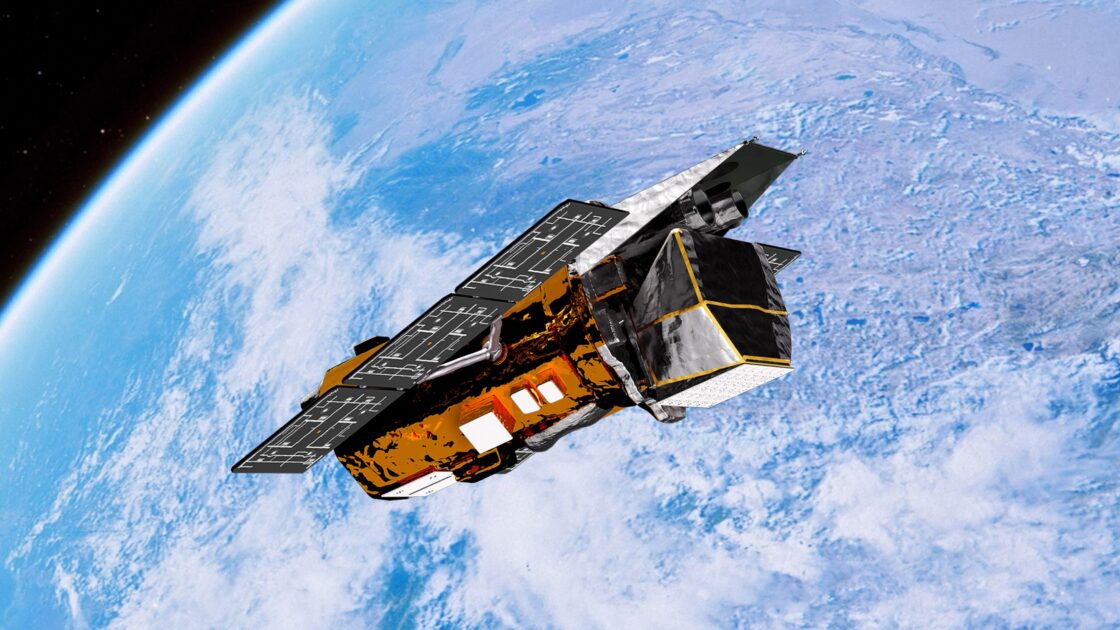
The Swift space telescope has concluded its historic mission after more than two decades of observing the universe’s most powerful explosions. Originally launched by NASA in November 2004, the multi-wavelength observation satellite was designed to rapidly pinpoint gamma-ray bursts and capture their fading afterglows before they disappeared.
Tracking Gamma-Ray Bursts and Cosmic Events
The spacecraft was equipped with an ultraviolet and visible-light telescope, an x-ray telescope, and a gamma-ray-burst alert telescope. S. Bradley Cenko, the mission’s principal investigator at NASA’s Goddard Space Flight Center, explained that the telescope was built specifically to study fleeting outbursts that happened too quickly for large telescopes to target.
Swift typically detected a burst, relayed its coordinates to other observatories, and swiveled into position in about a minute. In May 2005, it successfully captured the afterglow of a short gamma-ray burst lasting just 0.03 second, confirming theoretical models that such bursts stem from merging neutron stars.
Over its lifetime, Swift observed more than 2,000 gamma-ray bursts and over 1,400 supernova explosions. It also monitored active galaxies, watched black holes tear apart stars, and produced a publicly available 12-terabyte dataset comprising 22 years of brightness measurements and over 1.5 million images.
Failed Rescue Mission and Final Observations
Operating in low Earth orbit without thrusters, Swift relied on a flexible observation planning system and scheduled up to 75 distinct targets per day. However, lacking propulsion to maintain its altitude, atmospheric drag caused the satellite to descend much faster than anticipated due to increased solar activity.
To save the observatory, NASA partnered with space startup Katalyst Space Technologies under a $30 million contract signed in September 2025. Katalyst launched the LINK small satellite on July 3, 2026, using a Northrop Grumman Pegasus XL rocket, aiming to capture Swift with three robotic arms and boost its orbit.
During in-orbit testing, LINK suffered a malfunction in its attitude-control system. On August 19, NASA and Katalyst announced the cancellation of the rescue operation, transitioning the mission into an in-orbit demonstration. Although LINK successfully approached within 12 to 15 kilometers of Swift, it did not move closer and eventually reentered Earth’s atmosphere on September 25.
Following the canceled rescue, the Swift team restarted the telescope’s instruments on August 26 and captured images of Tycho’s supernova remnant. As altitude dropped below 275 kilometers, the telescope could no longer maintain a stable target lock, ending its scientific mission on October 20.
Sean Domagall-Goldman, director of the Astrophysics Division at NASA headquarters, noted that the mission delivered an incredible return on investment by operating for more than ten times its planned two-year duration. NASA is now evaluating ways to utilize its existing fleet to continue responding swiftly to cosmic phenomena.