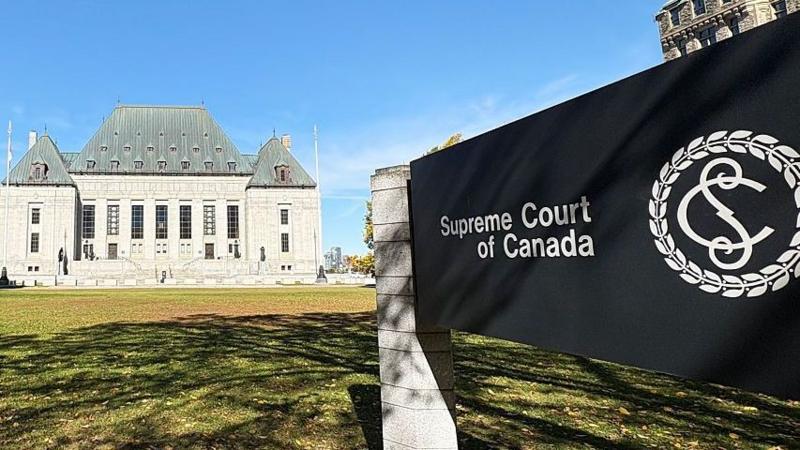
Canada’s top court has largely upheld a Quebec law banning public sector workers from wearing religious symbols, including the hijab and the cross. The legislation, known as Bill 21, faced legal challenges from various groups, including female Muslim, Sikh, and Catholic teachers who argued it violated their fundamental rights.
Legal Challenges and Constitutionality
Quebec passed the law in 2019 using a unique fixture of Canada’s constitution called the notwithstanding clause, a legal loophole allowing governments to override certain rights such as freedom of religion. The Supreme Court’s decision is among the most closely watched in Canadian history, carrying an impact across Quebec and the entire country. The court was asked to rule on the constitutionality of Bill 21, the appropriateness of Quebec’s use of the notwithstanding clause, and whether limits exist on its use.
On Friday, the Supreme Court confirmed the validity of Bill 21 while ruling that the law infringes on democratic rights by prohibiting Quebec’s elected officials from wearing face coverings for religious reasons. Additionally, the court ruled that Canadian courts hold the power to declare whether a law aligns with the Canadian Charter of Rights and Freedoms even when the notwithstanding clause is invoked, though they chose not to do so in this case. While the majority of the seven justices found the law largely valid, Justices Andromache Karakatsanis, Michelle O’Bonsawin, and Nicholas Kasirer dissented on parts of the decision, writing that the notwithstanding clause cannot authorize laws incompatible with Canada’s fundamental character as a free and democratic country. They stated that the law infringes on charter guarantees regarding freedom of religion, freedom of expression, and the right to equality.
Reactions from Critics and Officials
Civil liberty groups in Quebec criticized Bill 21, asserting that it disproportionately affects Muslim women wearing the hijab and excludes them from key areas of public life in the province. Stephen Brown, CEO of the Canadian Council of Muslims, condemned the court’s decision and labeled the legislation discriminatory, stating that entire categories of people are barred from employment sectors based on their identity rather than their actions. Ortona, chair of the English Montreal School Board—one of the primary groups challenging the law—told reporters that the board was very disappointed with the ruling and that it was not the expected result, though they took solace in various court declarations.
Quebec has maintained that the law is necessary to uphold state secularism, known as laïcité, as a core component of provincial identity. Earlier this year, the province passed another bill expanding secularism rules to subsidized daycares and post-secondary institutions while restricting public prayer with fines for non-compliance. The leader of the Bloc Québécois, a federal party advocating for Quebec sovereignty, told reporters in French that Friday’s ruling upheld the province’s right to protect its values, adding that they are now positioned to move forward with preserving the elements defining the distinct nature of Quebec society.
Prime Minister Mark Carney stated on CBC that his government would study the implications of the ruling, adding that it remains important for all legislatures to respect the rights and liberties of all Canadians, including minorities.