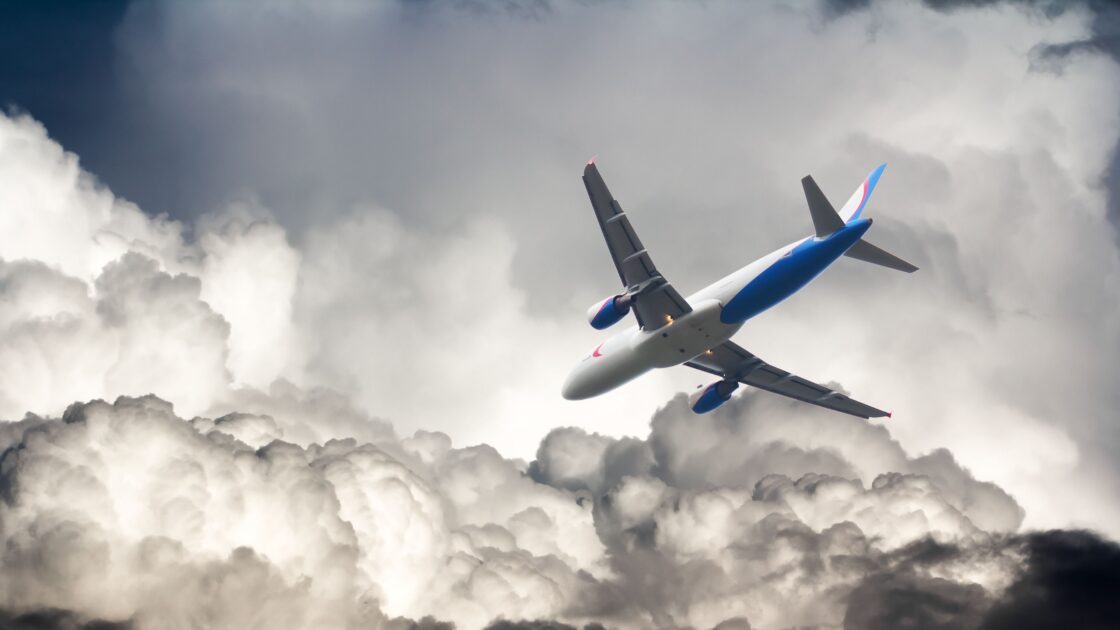
Turbulence remains one of the most challenging problems in classical physics, yet a new wave of data-driven forecasting efforts aims to give fliers a smoother journey. Commercial airplanes and satellites currently generate massive amounts of data every second, creating fresh opportunities to study and anticipate unpredictable atmospheric shifts.
The Rising Challenge of Turbulence
Aviation safety data from the Federal Aviation Administration shows that more than 200 people sustained serious injuries on US flights due to turbulence between 2009 and 2023. At the same time, climate change continues to alter global jet stream conditions, producing destabilizing wind shear that leads to sudden, clear-air turbulence which is difficult for pilots to spot ahead of time.
According to Larry Cornman, a physicist with the National Science Foundation’s National Center for Atmospheric Research, increased air traffic paired with lower communication and computing costs have made the present moment ideal for tackling the issue. As WIRED reported, researchers recently figured out that federally required aircraft broadcasts containing position, altitude, and speed can serve as crowdsourced data to spot unexpected turbulence without installing new hardware.
Government backing for turbulence research has also expanded significantly. In September, the National Science Foundation awarded $30 million to nine universities to establish a new research center named Tempest, which focuses on predicting turbulence in the atmosphere, inside fusion reactors, and across space gas clouds.
Applying Machine Learning and Crowdsourcing
While perfecting turbulence prediction remains virtually impossible due to the countless variables occurring simultaneously at tiny scales, advanced machine learning offers new paths forward. Michael Murillo, a professor of theoretical and computational physics at Michigan State University, noted that recent developments involving large language models and artificial intelligence are beginning to assist with complex equations like Navier-Stokes that form the foundation of turbulence models.
In the commercial sector, companies are already putting data-sharing tools into practice. Tel Aviv-based startup SkyPath utilizes accelerometers on cockpit iPads to gather anonymous crowdsourced data across different airlines. CEO Maya Shpak stated that the application is installed on more than 40,000 devices and used by major carriers such as American Airlines. By combining this information with weather forecasts, the app helps pilots steer clear of rough air and provides advance warnings to passengers 10 to 15 minutes before choppiness hits.
An airline pilot named Eric, who spoke to WIRED anonymously because he lacked authorization to talk to the media, explained that the application serves as a useful tool for preparing passengers, though its effectiveness relies heavily on widespread adoption in heavily traveled areas.
Despite these technological strides, Cornman urged realistic expectations regarding predictive accuracy. The physicist emphasized that achieving near-total predictive certainty remains unlikely in the near future due to the inherent complexity of the phenomenon.