Table of Contents
The collapse of the world’s biggest climate change conference over the mere mention of fossil fuels highlights both the fragile state of climate diplomacy and the deep divisions of the modern world.
The Breakdown in Antalya
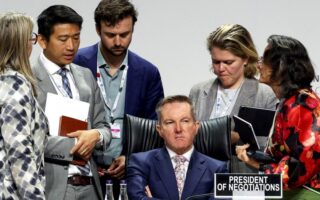
The summit in Antalya, Turkey, ended without a final agreement after negotiations collapsed. Chris Bowen, the Australian minister who led the talks, described a backdrop constituting the most complicated and fraught geopolitical environment in living memory, with competing demands creating unbridgeable red lines as reported by BBC News. Murat Kurum, Turkey’s environment minister and the summit’s president, argued that governments should not disappoint people desperate for climate action by getting hung up on one word or phrase. Three years prior at COP28 in Dubai, nations agreed to transition away from fossil fuels, but the proposed Antalya Pact failed to include them entirely.
Countries rejecting the pact argued that promising to reduce greenhouse gas emissions is vastly different from committing to move away from the fuels driving the crisis, fearing a weakened agreement. While much bargaining occurs behind closed doors, oil-producing nations voiced their opposition publicly. Mohammad Ayoub, speaking for the 22 Arab League countries, noted that Arab nations contributed under 2% of historical emissions and defended their right to choose how to tackle climate change based on national circumstances. Russia’s delegate, Sergei Kononuchenko, warned that cutting oil and gas supplies before demand drops would cause shortages, higher prices, and energy poverty, stating that they could not agree to any formulation on fossil fuel.
Broader geopolitical tensions were also evident. The United States, which previously helped broker compromises, had no official delegation present as President Donald Trump rejects the international climate process. Simultaneously, Trump, China’s President Xi Jinping, and Russia’s Vladimir Putin issued a joint declaration in Shenzhen pledging to increase production and supply of refined petroleum products.
Hope Among the Majority and Financial Disputes
Despite the deadlock, about 130 governments—roughly two-thirds of the delegations represented—backed explicit language on moving away from fossil fuels. Christiana Figueres, who led the UN negotiations delivering the Paris Agreement, defended countries that walked away rather than endorse a weaker commitment. However, divisions extended to climate finance. Kononuchenko criticized wealthy nations for providing money as loans rather than grants, leaving developing countries repaying more than they received under what he called an old colonial distribution of labour under a new banner. He directly addressed European representatives to air these grievances.
While Russia has its own reasons for criticizing Europe, many developing countries share complaints about inadequate funding for adaptation and clean economies. Mohamed Adow, a Kenyan campaigner heading Power Shift Africa, accused Europe of rejecting a flawed deal while refusing to acknowledge its own responsibility for the financial failure. UN climate chief Simon Stiell acknowledged the need to improve, modernize, and reform the process, with some governments proposing voting systems or separate agreements. However, international climate cooperation remains voluntary, and consensus protects smaller, poorer nations from being overruled by powerful states.
A Rare Moment of Agreement on the Danger
Despite failing to agree on a summit declaration, the transition toward solar panels, batteries, and electric vehicles continues, though not fast enough for the climate. Ironically, the final draft of the Antalya Pact contained remarkably strong language expressing deep concern that global warming would exceed 1.5°C in coming years and warning of irreversible damage. This language survived without opposition, showing that countries acknowledged the scale of the danger even while failing to agree on how to respond.
The underlying problem remains persuading nations with conflicting interests to take voluntary action that no international authority can compel them to execute.