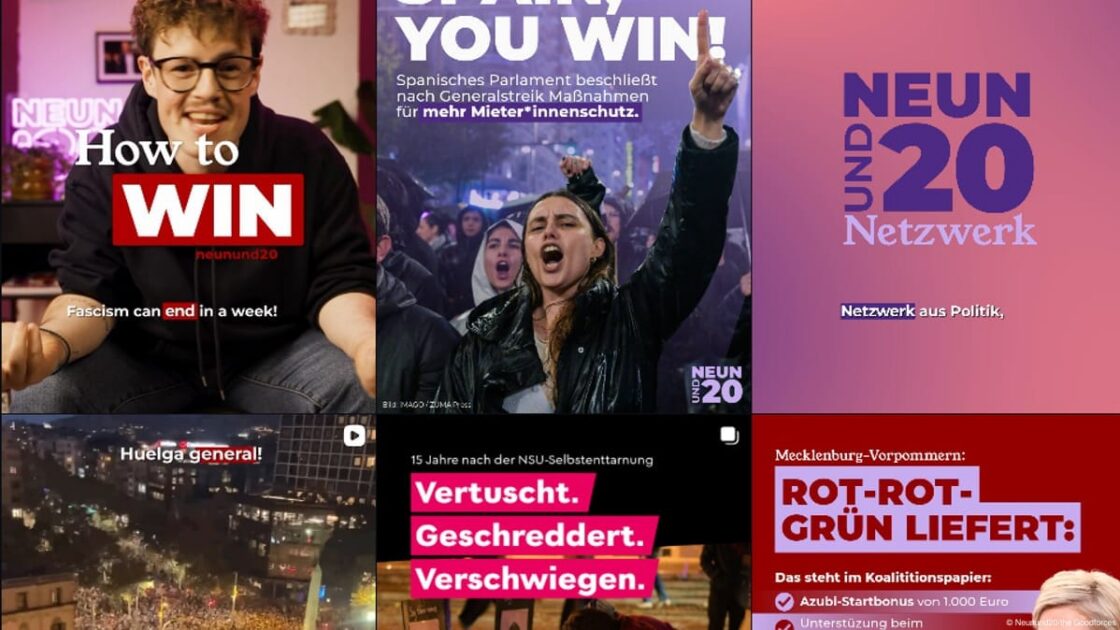
A Berlin-based agency called The Goodforces is using US-style political campaigning techniques, taking inspiration from American figures like Bernie Sanders, to build a left-leaning coalition for Germany’s 2029 national elections. Co-founded by Patrick Haermeyer and Peter Jelinek in 2024, the agency aims to counter the rise of the far right across Europe and provide an alternative narrative to public pessimism.
Digital Strategies and US Inspiration
The agency’s primary initiative, dubbed neunund20, relies on two core strategies. It provides digital spaces for short-form social media content covering political and social issues on platforms like Instagram, TikTok, and Bluesky, while also connecting content creators, activists, NGOs, and political initiatives around progressive topics. Users can access archives of social media materials to reshare, a feature modeled after the campaign of New York left-wing mayor Zohran Mamdani. Haermeyer, who previously worked as an online organizer for Bernie Sanders’ 2016 US presidential primary run, told Deutsche Welle: “The campaign’s aim is to give people hope and an alternative narrative to: Things are getting worse and worse.”
The Goodforces operates similarly to an American Super PAC by collecting funds and running campaigns independently of any single party or candidate. Funding for the agency comes from commissions and small donations, typically ranging from $20 to $50. Haermeyer emphasizes that the agency collaborates with grassroots organizations and activists rather than coordinating directly with the Social Democrats (SPD), the Left Party, and the Greens.
Reactions and Political Landscape in Germany
The agency’s involvement in physical campaigns has already drawn mixed reactions. During the September elections in Saxony-Anhalt, The Goodforces participated in a tactical voting initiative designed to prevent the far-right Alternative for Germany (AfD) from securing an absolute majority. The Greens and the SPD surpassed the 5% threshold to enter parliament, and both parties declared the assistance they received through €40,000 ($43,900) donations.
While some political figures and parties have criticized these tactics—with the populist Alliance for Social Justice and Economic Reason calling the intervention “infantilizing, and perhaps even antidemocratic,” and the Free Democrats labeling the tool misleading—experts see the movement as a response to traditional party shortcomings. Christoph Bieber, a political scientist at the University of Duisburg-Essen, noted as reported by Deutsche Welle that non-party campaigning compensates for rigid structures and the decades-long decline of big-tent parties, whose memberships have dropped sharply since 1990. Bieber warns that while US-style campaigning may not fully take root in Germany, it could open doors for similar methods and potentially lead to a further devaluation of traditional party structures.