Table of Contents
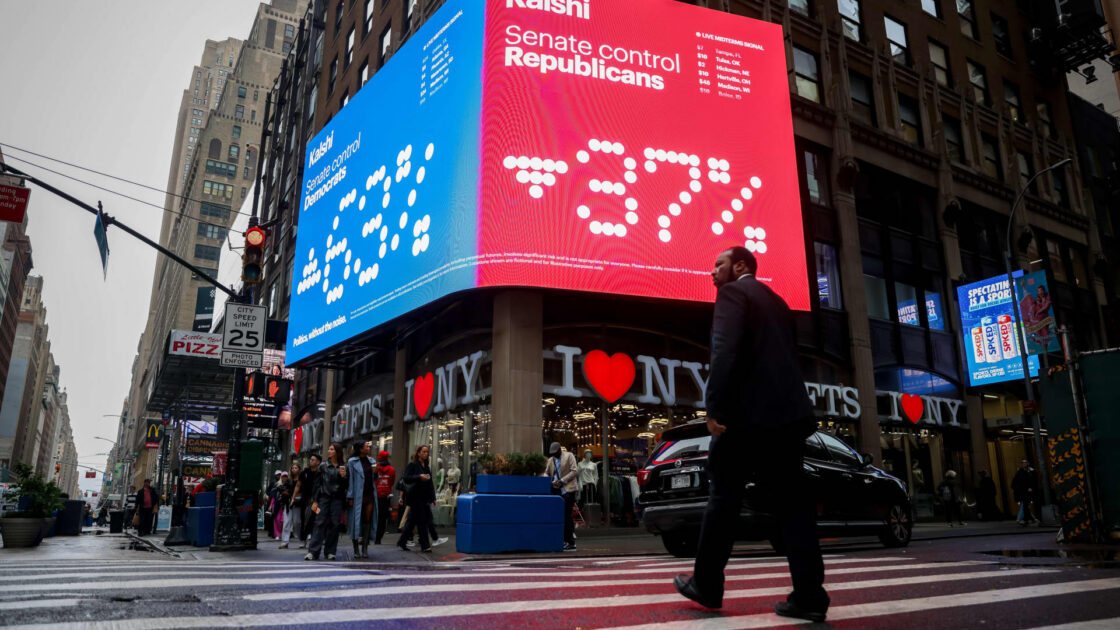
The regulatory turf war between states and the federal government is intensifying following the midterm elections, as primarily Republican-led states take action against prediction markets. At the same time, the Commodity Futures Trading Commission has stepped up its oversight of mention markets and defended its jurisdiction in court.
Federal Oversight and Legislative Action
The CFTC placed a hold on the certification of markets related to President Donald Trump’s words in mid-November, as reported by US Top News and Analysis (cnbc.com). Kalshi confirmed it was complying with the order, though CEO Tarek Mansour stated at an Axios event that the company disagreed with the decision. Meanwhile, the Senate passed a bipartisan bill on Thursday to ban CFTC-registered entities from listing contracts involving terrorism, assassination, war, military operations, or an individual’s death.
President Donald Trump nominated Nathan Anonick, a Republican, and Matthew Rowland, a Democrat, to fill two open seats on the commission. Both nominees appeared before the Senate Agriculture Committee on Tuesday, where senators questioned them about prediction markets, and both declined to state whether they viewed sports-related event contracts as gambling.
State Lawsuits and Legal Challenges
Utah Attorney General Derek Brown filed 14 criminal charges against Kalshi and its founders, Mansour and Luana Lopes Lara, on October 28 for allegedly violating state anti-gambling laws. Kalshi’s founders are scheduled to appear in person at Utah’s Third District Court on December 4. Kalshi spokesperson Dani Lever criticized the action, calling it a crazy overreach and playing politics. Utah also named institutional market maker Susquehanna International Group as a defendant in a separate civil complaint filed on October 20.
Louisiana’s Republican attorney general filed a complaint on November 12 to ban multiple exchanges from operating in the state, and a state judge issued a temporary restraining order that same day. In response, the CFTC sued Louisiana on November 13 and filed a separate lawsuit against Arkansas after that state pursued civil enforcement against Kalshi. The federal agency has now sued 12 states to defend its claim of exclusive jurisdiction over prediction markets.
Appellate Court Rulings and Political Fallout
The Fourth U.S. Circuit Court of Appeals ruled 2-1 that Maryland can enforce its state gambling law against Kalshi, though the judges offered differing reasoning. Kalshi spokesperson Elisabeth Diana noted that the splintered decision with three contradictory opinions shows a lack of a unified legal argument against prediction markets. Overall, prediction markets have recorded three losses and one win at the circuit court level, with the ultimate authority over sports-related event contracts expected to reach the Supreme Court.
Kalshi ended its advisory relationship with Donald Trump Jr. on November 12 due to his venture capital firm, 1789 Capital, holding a stake in rival platform Polymarket. Concurrently, nine Democratic senators led by Adam Schiff sent a letter to the CFTC on Monday urging the agency to reverse a directive that allowed platforms to avoid geofencing when facing unfavorable state-level court rulings. Additionally, Democratic Representative Ro Khanna called on social media for Congress to investigate and completely ban sports prediction markets.
The legal battles between state attorneys general and federal regulators will continue as pending court dates and appeals move forward.