Table of Contents
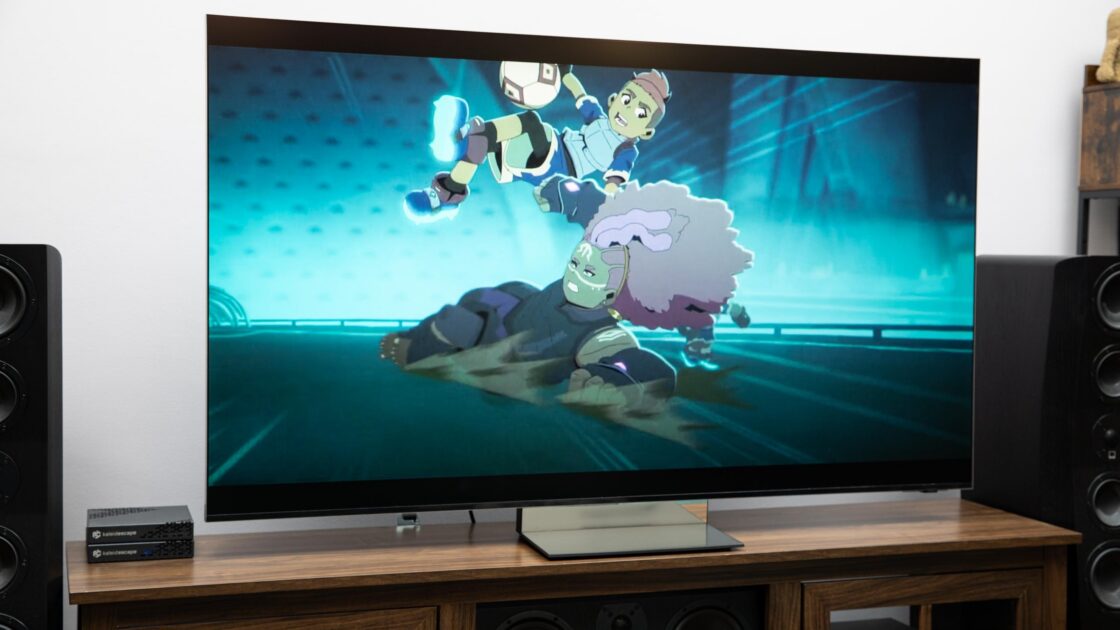
RGB LED TVs have become more affordable, and the Samsung R95H demonstrates many capabilities of this new backlight technology. As reported by The Verge, the television displays a wide range of colors and performs exceptionally well in bright rooms thanks to its matte screen and high light output.
Color Performance and Accuracy
Unlike standard LED TVs that use white or blue LEDs, RGB LED models utilize individual red, green, and blue LEDs for their backlight. This allows the Samsung R95H to fully display the P3 color space used in most movies, as well as the wider BT.2020 color space. Color accuracy is strong in HDR, though SDR content tends to be overbrightened. Viewers can experience lifelike greens in nature documentaries and natural skin tones, while white and gray tones display a very minor blue tint.
The television achieves solid light output, measuring 694 nits on a full-field white screen and hitting 2,206 nits for specular highlights in Filmmaker mode. Black levels are impressive for an LED display, showing minimal blooming compared to other RGB LED models released this year. The matte glare-free finish effectively minimizes reflections from ceiling lights without significantly washing out dark images in bright rooms.
Gaming and Performance Issues
Gaming performance on the R95H is smooth, particularly when racing at 120Hz, with recent firmware updates addressing earlier smearing issues. However, the technology introduces color crosstalk, where a dominant onscreen color bleeds into nearby lighter colors such as white text or clouds. This effect is noticeable with news tickers on red backgrounds or specific gaming elements, representing a current trade-off for achieving a wider color gamut.
The R95H operates on Tizen OS, which features menus and input selections buried deeper than necessary. The included solar- and USB-C-rechargeable remote features a cramped button layout and clunky volume controls. Additionally, the TV lacks Dolby Vision support, continuing Samsung’s exclusive backing of HDR10 Plus.
Market Position and Competition
Priced higher than several competitors, the R95H competes against models like the Sony Bravia 9 II, which offers better processing and brightness, and the more affordable TCL X11L. Flagship OLED TVs from Samsung and LG provide superior contrast for similar or lower prices, keeping OLED a step ahead in overall picture quality. Despite these alternatives, the R95H remains a strong contender for buyers seeking wide color coverage and a matte screen.