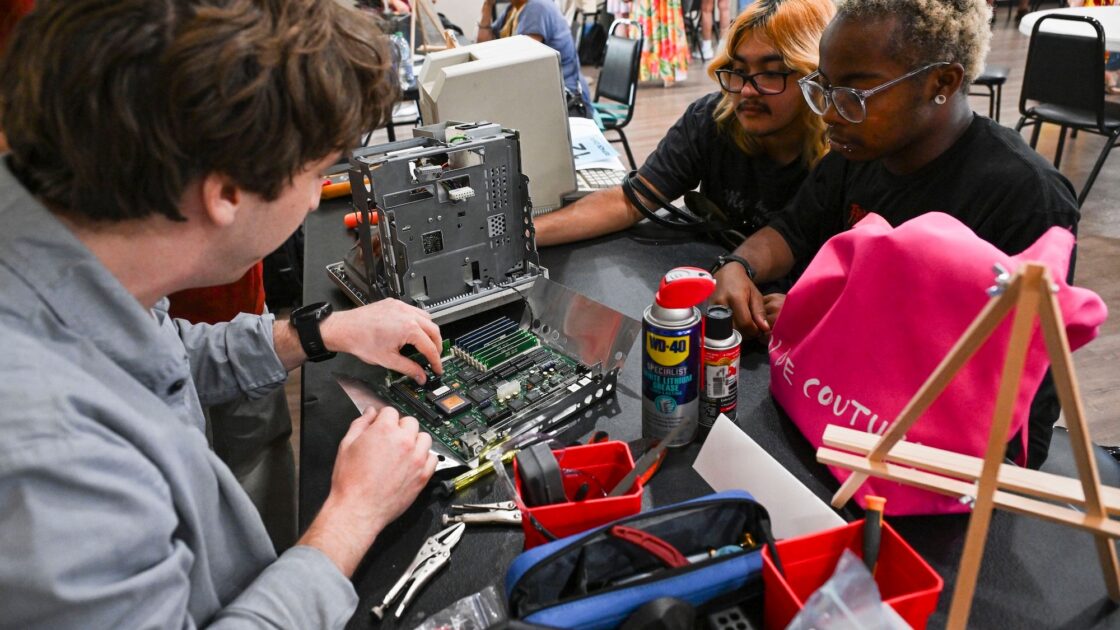
Across the United States, community gatherings known as repair cafes are drawing growing numbers of Americans seeking to fix broken household items. These events challenge a consumer culture that pushes for constant replacement over repair, contributing to greenhouse gas emissions and growing mountains of waste.
Building a Community Around Fixes
At a semi-regular repair cafe in Decatur, volunteers wearing green shirts printed with the phrase “I can probably fix that” offered their skills free of charge. Attendees watched as items like mid-century modern lamps and family furniture were repaired. Lilly Pettus brought a decades-old dining room set with a broken joint to the event, working alongside strangers to stabilize the wooden chair.
Pettus decided to give the chair a second chance after months of it sitting unused in her home, influenced in part by environmental concerns shared by one of her children. Martine Postma, director of Repair Café International, stated that throwing away broken items is a lonely experience compared to the connection found in repairing them. Postma, a former journalist, founded the Netherlands-based network in 2010 to combat markets flooded with short-lived trash.
According to Repair Café International, these events prevented nearly 2 million pounds of waste in 2025 and reduced greenhouse gas emissions equivalent to the average consumption of about 1,000 Dutch families. Despite these efforts, advocates frequently encounter obstacles created by manufacturers, such as restricted access to parts, locked software, and design choices that make repairs difficult or unsafe.
Fighting Obstacles and Economic Pressures
A report titled “Nixing the Fix” by the Federal Trade Commission details how consumers are incentivized to replace products prematurely. In response, California, Colorado, Minnesota, and New York passed right-to-repair legislation in 2023, with the European Union following a year later. Organizers view repair cafes as a natural space to support right-to-repair activism and push for broader systemic changes, such as raw material taxes in Europe.
Repair cafes adapt to the socioeconomics of their local areas. At a meetup in the Collier Heights neighborhood of Atlanta, where median household income is lower than in Decatur, attendees often brought items out of immediate necessity rather than sentimentality. Gale Pines, a recent nursing school graduate facing job hunting challenges, brought a broken air fryer used for preparing evening meals because they could not afford a replacement.
Volunteers at Collier Heights quickly identified a bad capacitor and replaced it using a spare part brought by another volunteer. Pines expressed appreciation for the supportive environment and the chance to keep usable items out of landfills amid economic strain and climate concerns. Lew Lefton, a volunteer at the cafe, noted that threats like climate change have driven people to rediscover basic human skills, offering a different outlook on the future through learning and volunteering.
Pettus left the Decatur event with a newly sturdy chair, having received advice from a fellow attendee on purchasing fabric for upcoming upholstery work. Reflecting on the experience, Pettus expressed satisfaction in learning how her family furniture was constructed and contributing to its restoration.