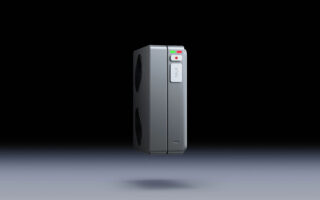
Bambu Lab has introduced the P3C 3D printer priced at $1,149, bringing advanced multi-material features from its higher-end systems to a more affordable price point. The new printer can swap between materials on the fly, mix different colors, combine soft and hard materials, and utilize various nozzle sizes and filament diameters in a single print.
Design and Default Features
The P3C features a print area of 256 x 256 x 260mm and supports up to seven automatically swapping tools, though it ships by default with five 0.4mm print nozzles. Users can add up to two more printheads, which cost up to $100 each. The system also accommodates thicker 2.85mm filament, pens, cutting blades, and debossing or foil transfer tools.
However, the automated material system (AMS) on the P3C omits motorized automatic filament loading. Karlie Hou, a spokesperson for Bambu, explained the reasoning behind the omission in a statement to The Verge. “The AMS 3P’s design deliberately omits the auto‑loading feature as part of the effort to offer premium multi‑head performance at roughly half the price of the flagship H3C system, allowing a far broader audience — hobbyists, small studios, and educational institutions — to enjoy premium multi‑head, multi‑color printing experience,” Hou stated.
Manual Operation and Performance
Loading the five nozzles requires users to manually preheat each one and push a string of filament down a long tube by hand. Bambu estimates that manual reloading for five spools takes roughly five minutes, though the company stated that an upcoming software update aims to reduce total hands-on time to under one minute. Unlike the P2S model, the P3C avoids the need to purge time and filament between color changes.
The five included nozzles allow users to load cyan, magenta, yellow, black, and white filaments for color mixing. While color mixing can produce detailed test prints, certain colors require additional adjustments. Bambu recommends utilizing a feature called mixed color sublayer for better results, and users can also connect a standard motorized AMS to one of the P3C printheads as a supported workflow.
Future testing will determine the long-term performance of the P3C, including how well the filament remains dry when stored in the printheads over extended periods.