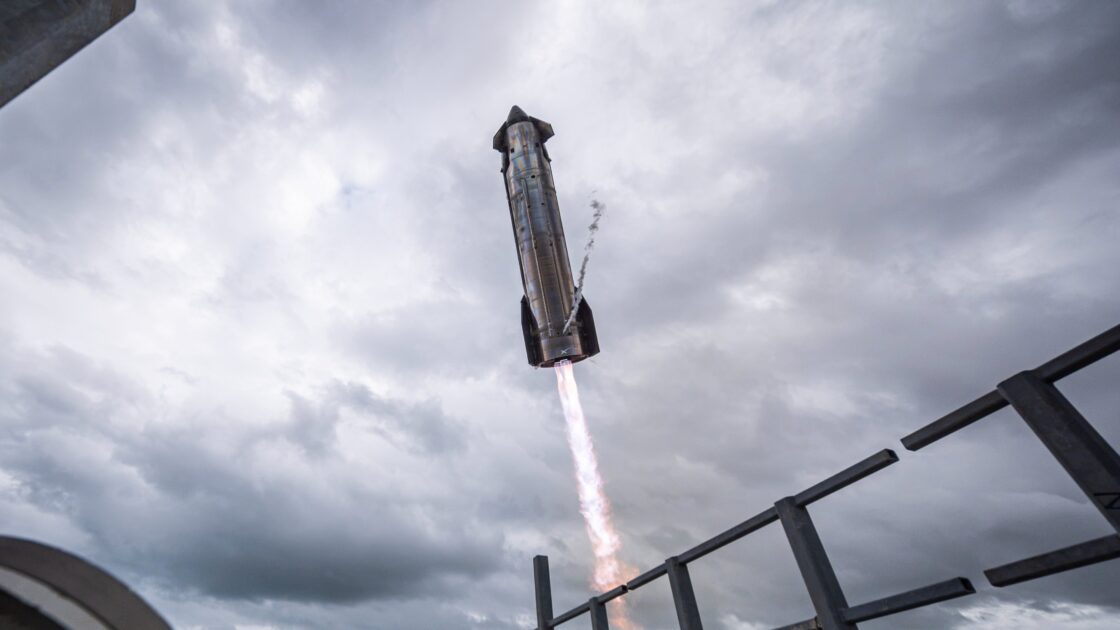
SpaceX’s recent successful recovery of its Starship rocket has removed a significant obstacle for NASA’s lunar ambitions, enabling higher launch frequencies and a crucial, delayed orbital refueling demonstration next year.
Expanding Infrastructure and Launch Cadence
For SpaceX, the successful mid-air rocket catch assists engineers in figuring out how to reuse Starships quickly, which will speed up the rollout of the newest generation of Starlink Internet satellites. NASA anticipates that a quicker launch pace will generate faster insights while SpaceX builds a deep space variation of Starship designed to transport astronaut crews down to the lunar surface.
SpaceX intends to activate a second Starship launch facility at the Kennedy Space Center in Florida early next year. Additionally, a second Starship manufacturing plant is currently being built at Kennedy, operating alongside the current production line located at Starbase in Texas. Having dual launch facilities provides SpaceX with the necessary components to advance Starship to its next phase.
The scheduled Starship refueling demonstration has been pushed back by two years from late 2024 due to technical hurdles resolved by SpaceX. Saturday’s unprecedented catch of Starship by the launch tower indicates that SpaceX may have overcome these difficulties.
Additional Starship lander evaluations are scheduled for next year, beginning with NASA’s Artemis III mission, which will be followed by an uncrewed Starship lunar landing demonstration. While Artemis III does not involve orbital refueling, the uncrewed landing test relies heavily on it.
Artemis Program Leadership and Lander Priorities
Ars Technica recently spoke with Steve Creech, the program manager for NASA’s Human Landing System, who manages NASA agreements with SpaceX and Blue Origin aimed at creating crew-rated lunar landers for the Artemis program.
For the Artemis III mission, NASA plans to send a crew of four individuals into low-Earth orbit using a Space Launch System rocket paired with an Orion spacecraft. Orion will initially dock with Blue Origin’s Blue Moon lander following its launch on a New Glenn rocket, allowing astronauts to conduct two days of tests, open hatches, and enter the pressurized crew cabin to evaluate the environmental control and life support systems.