Table of Contents
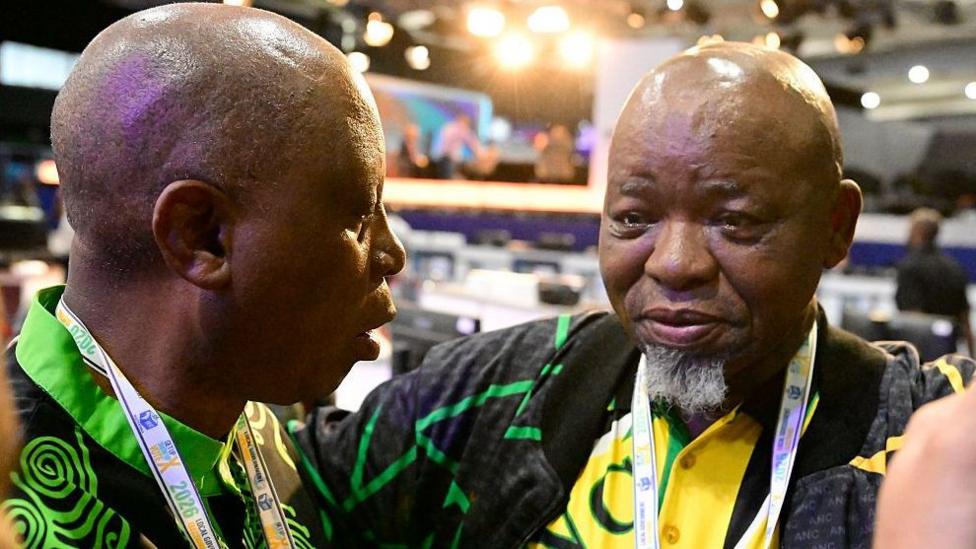
The African National Congress (ANC) is racing against time to secure power-sharing deals across most of South Africa’s cities after experiencing a massive drop in support during local elections. Marking its worst result since coming to power in 1994, the party won an overall majority in only one of the country’s nine provinces, Limpopo, down from six previously, and secured the most votes in just two of the eight major cities.
Election Results and Municipal Breakdown
While the ANC saw its national support drop to 31% from 46% in the previous local election, it still captured more votes than any other party. However, in the economic hub of Gauteng province—which encompasses Johannesburg and Pretoria—the pro-business Democratic Alliance (DA) claimed the most votes in both cities as well as Ekurhuleni. Nationally, the DA grew its vote share to 25% from 22% five years ago, while retaining its absolute majority in Cape Town and leading the vote count in Nelson Mandela Bay.
The left-leaning uMkhonto weSizwe (MK) Party, led by former President Jacob Zuma, placed third with 10% of the vote. The MK Party emerged as the largest political force in KwaZulu-Natal province with 34% of the vote, including the port city of Durban, though it will also need to negotiate a coalition agreement to govern.
Coalition Strategy and Tensions with the DA
Parties face a deadline of 27 November to negotiate and establish local governments. Although the ANC and DA currently share power at the national level alongside eight other parties in a Government of National Unity (GNU) formed in 2024, state broadcaster SABC reported that senior ANC leaders view a municipal partnership with the DA as an absolute last resort.
The ANC has instead focused on courting smaller parties, with multiple reports indicating potential arrangements with the anti-immigrant ActionSA in Gauteng, where ActionSA finished third with 17% of the vote. A party insider told the Daily Maverick that a nationwide municipal agreement with the DA was overwhelmingly rejected at an internal ANC meeting.
Political analysts hold mixed views on the fallout for the national coalition. While some experts suggest the DA might need to re-evaluate its position in the national government, political analyst Andre Duvenhage told BBC News that asymmetric coalitions could emerge where parties cooperate in some regions while remaining in opposition elsewhere. Another analyst, Sandile Swana, stated that any party walking away from the GNU over local failures would be shooting itself in the foot.
Service Delivery and Future Outlook
Voters punished the ANC primarily due to widespread corruption and declining confidence in basic service delivery, including water, electricity, and refuse collection. Past coalition experiences over the past decade in half of the country’s cities have frequently proven unstable, disrupting municipal services and stalling governance, particularly across Gauteng.
Experts warn that resolving the deep-seated issues facing urban municipalities will require a long-term commitment. “I think if we are really turning the ship around, we are talking about a 10-year period,” Duvenhage noted. Swana echoed this assessment, stating it would take a decade to cleanse and purify local councils and reinstate them as proper municipalities.