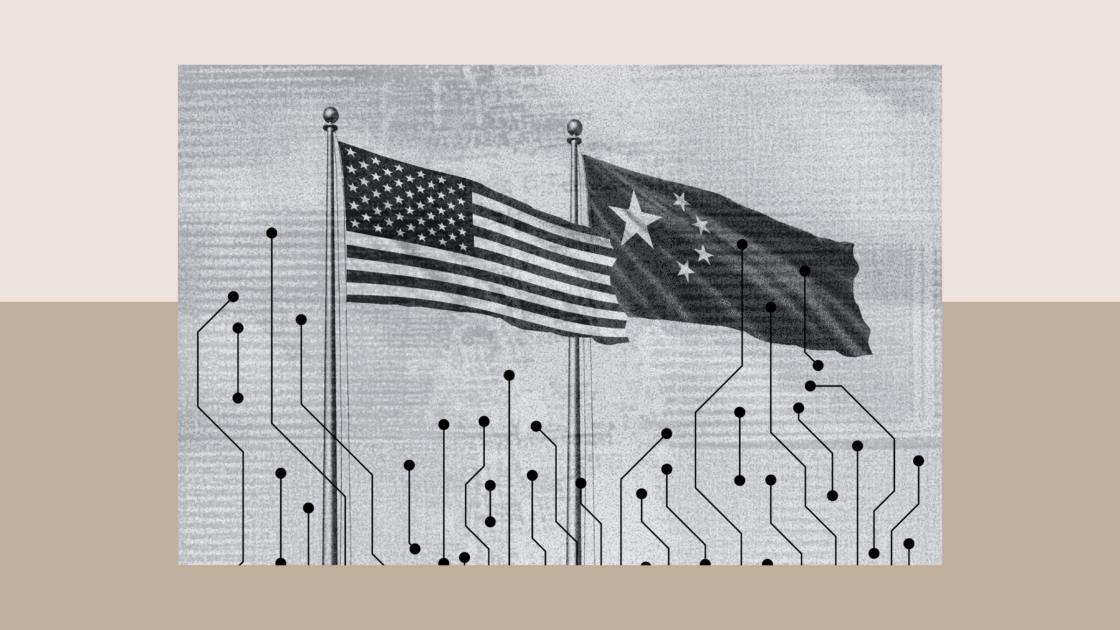
The global dominance of the United States and China in artificial intelligence has created a widening geographic and technological divide. As these two superpowers consolidate their power, the rest of the world remains largely dependent on American and Chinese systems while having little say in how AI is built, tested, and governed.
The Concentration of AI Power and Infrastructure
The future of artificial intelligence outside the United States and China largely depends on these two nations, which dominate computing infrastructure, energy consumption, and research talent. According to estimates by research organization Epoch AI, the U.S. received roughly 72% of the world’s new AI computing capacity between 2022 and June 2026, while China received 10%, leaving just 18% for all other countries combined. Data centers in the U.S. and China also accounted for about 70% of global electricity consumption by data centers in 2024, as estimated by the International Energy Agency. Furthermore, a Carnegie Endowment study of more than 10,000 researchers who published at the NeurIPS conference in 2025 found that three-quarters were affiliated with employers in the U.S. or China.
Beyond physical infrastructure, significant gaps persist in training data and language coverage. Most of the world’s approximately 7,000 languages are poorly supported, despite being spoken by about 3.4 billion people. A snapshot of the Common Crawl web archive showed that roughly 43% of pages were in English, while only 0.2% were in Hindi, a language spoken by over half a billion people. Developers of frontier models heavily rely on publicly available internet data, which can introduce biases and reinforce cultural and linguistic homogenization. Studies have shown that users in India writing with AI assistants often see their writing styles shift to mimic American patterns, losing cultural nuance.
Sovereign AI Models and Geopolitical Vulnerabilities
Dependence on foreign models leaves other nations vulnerable to sudden policy changes in Washington or Beijing. In June, the U.S. government ordered Anthropic to block foreign nationals from accessing specific models due to national security concerns, prompting the company to briefly take the models offline globally. This incident accelerated efforts by several middle powers to develop sovereign AI models of their own, including Sarvam in India, Cohere in Canada, Mistral in France, and Jais in the United Arab Emirates. However, many sovereign models adapt open-weight models from the U.S. or China and may still inherit underlying biases or misread local social norms.
The U.S. and China are actively building competing coalitions in artificial intelligence. Beijing established the World Artificial Intelligence Cooperation Organization in July, while Washington leads the Pax Silica initiative and plans to press allies to choose sides. Experts suggest that other countries seeking a greater voice should form their own coalitions to share resources, negotiate together, and help shape global AI rules that balance safety, productivity, and national sovereignty.
Countries lacking the computing power to build frontier models independently should pool resources to build shared regional infrastructure, coordinate training initiatives, and invest collectively in research. Funders must also support long-term international partnerships to help researchers build shared evaluation frameworks and safeguards. Ultimately, smaller and specialized models deserve investment alongside all-powerful frontier systems to ensure that artificial intelligence responds to the diverse needs of communities worldwide.