The United Nations human rights committee has issued a warning regarding the misuse of national security and counter-terrorism legislation to suppress civil society. The guidance comes as the United Kingdom’s Supreme Court deliberates on the legality of the government’s decision to ban the activist group Palestine Action.
Concerns Over Vague Legislation
In its first comprehensive guidance on freedom of association, the committee expressed concern over the use of broadly defined laws that target groups labeled as “extremist” or “undesirable.” Hélène Tigroudja, the committee’s vice-chair, stated that the guidance was prompted by developments in several nations, including the UK, Russia, China, North Korea, and Israel.
While acknowledging that national security and counter-terrorism are legitimate grounds for restricting association, Tigroudja emphasized that these justifications are frequently abused. “These legitimate purposes are too often so vaguely defined by domestic legislation, and more importantly, so extensively misused by authorities to silence by way of criminalising associations such as climate activists, children and young-led movements, human rights defenders, journalists, trade unionists, that these aims must be used with a heightened caution,” she said.
The committee further noted that the rhetoric of “terrorism” is increasingly employed globally to expose organizations and their members to public criticism, heavy fines, and detention. The report explicitly states that advocating for accountability, reporting human rights violations, or defending human rights cannot be classified as a breach of public order.
The Palestine Action Case
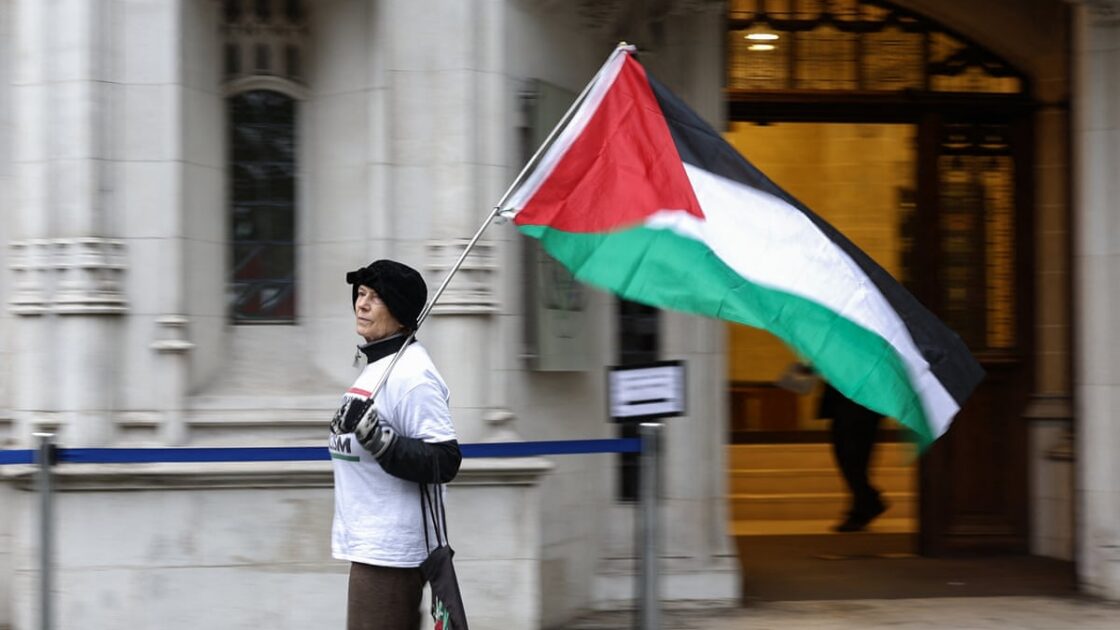
Palestine Action became the first direct action group to be proscribed under the UK Terrorism Act, placing it in the same legal category as groups such as al-Qaida and Boko Haram. The organization’s legal challenge, which reached the Supreme Court earlier this month, argues that the ban disproportionately interferes with the rights to freedom of speech and protest.
During the proceedings, lawyers for the group described its mission as the “disruption of the supply of weapons from the United Kingdom to Israel at a time when the international court of justice (“ICJ”) had found ‘a real and imminent risk [of] irreparable prejudice’ to the rights of Palestinians in Gaza not to be subjected to acts of genocide.” Israel has consistently denied allegations of war crimes or genocide.
Huda Ammori, a co-founder of Palestine Action, stated that the UN report addresses the core of their legal battle. “The government cannot simply label a movement ‘terrorist’ and use that designation to suppress political dissent by extinguishing the fundamental rights of its members and supporters,” Ammori said. She urged the Supreme Court to overturn the ban, adding that if the domestic court fails to protect these freedoms, the group intends to take the matter to the European Court of Human Rights.
Government Stance
The UK Home Office maintains that the proscription of Palestine Action was a necessary, evidence-based decision endorsed by Parliament. A spokesperson for the department rejected the characterization of the group as a civil disobedience movement, stating: “Palestine Action is not a civil disobedience protest group but one that carried out acts of terrorism, celebrated those who took part in them and promoted the use of violence.”
The Home Office further asserted that the ban does not infringe upon lawful protest, emphasizing that free speech remains a fundamental democratic right in the UK.
The Supreme Court is currently expected to deliver its ruling on whether the proscription of Palestine Action was lawful.