Table of Contents
Search operations are ongoing off the coast of Senegal following the capsizing of a boat believed to be carrying between 50 and 100 migrants. While four bodies have been recovered, dozens of individuals remain missing after the vessel washed ashore near the village of Yenne, south of Dakar.
Details of the Incident
The tragedy occurred at approximately 02:00 local time. Oumar Sow, a representative of the village chief, told AFP that the cries of those on board were audible from the beach. The badly damaged boat was found with various personal items, including mobile phones, identity documents, and a school enrollment paper, scattered in the wreckage.
Reports regarding the number of passengers vary. A survivor interviewed by police estimated that about 100 people were on board, including five women. Conversely, a local official informed Reuters that the vessel was carrying 50 people and struck a rock while migrants were attempting to transfer from smaller fishing boats to a larger craft.
Government Response and Migration Trends
This incident follows a shipwreck less than two weeks ago near the town of Thieppe, which resulted in at least 39 deaths. During a cabinet meeting on Wednesday, President Diomaye Faye expressed alarm over the rising number of irregular departures. He has directed the interior ministry to investigate the root causes of these dangerous journeys and to develop strategies to address the issue.
The Senegalese navy reported that it had successfully rescued more than 1,400 people between Monday and Tuesday of this week. According to the International Organization for Migration (IOM), at least 454 deaths and disappearances have been recorded off the West African coast so far this year, though the agency notes that the actual toll is likely higher as many incidents go unrecorded.
The Route to the Canary Islands
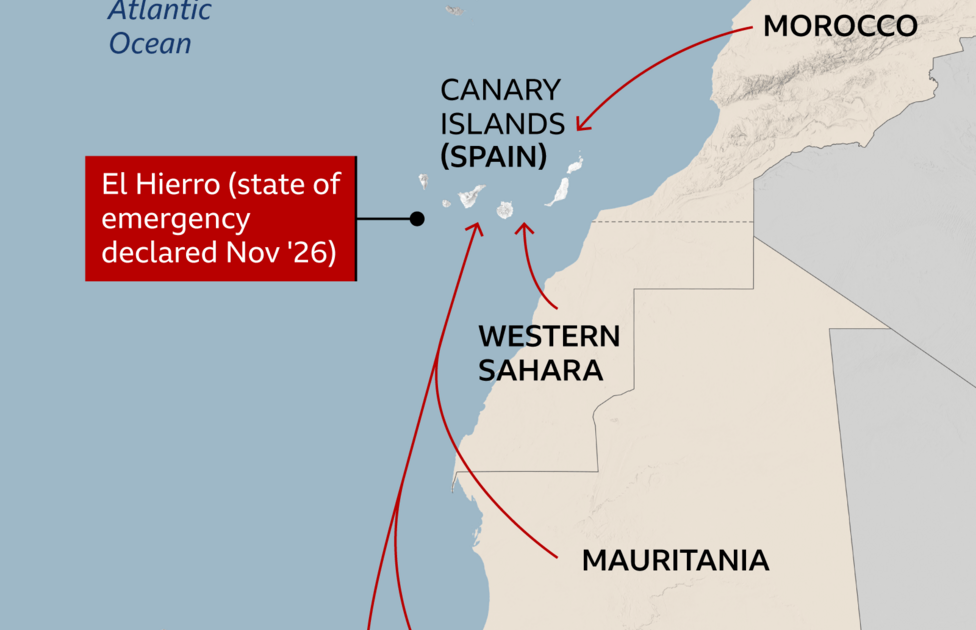
Migrants are increasingly utilizing wooden boats known as pirogues to reach Spain’s Canary Islands, as routes through North Africa have become more difficult due to stricter border controls. These vessels are frequently overloaded and ill-equipped for the long Atlantic crossing. The UN reports that the majority of migrants arriving in the Canary Islands this year are from Senegal, often motivated by poverty, limited job prospects, and existing migration networks.
The surge in arrivals has placed significant pressure on the region; on 7 November, the island of El Hierro declared a state of emergency after receiving more than 3,300 people in approximately 30 boats in a single month. Search efforts in Yenne, which continued throughout Wednesday, are scheduled to resume on Thursday.