Table of Contents
Disney reported quarterly earnings and revenue that exceeded analysts’ expectations and announced it is targeting $3 billion in cost savings by fiscal 2029, as reported by US Top News and Analysis (cnbc.com). The entertainment giant also raised its annual dividend and forecasted strong growth across its business segments for the upcoming fiscal year.
Cost-Cutting and Job Cuts
Those cost-cutting efforts include several rounds of layoffs announced in recent months, Disney’s chief financial officer, Hugh Johnston, told US Top News and Analysis (cnbc.com). The most recent round, which seeks to reduce costs by up to 20%, was reported earlier this month. Future cost-saving measures will include reductions in administrative and other general expenses, Johnston said, while adding that the company expects more layoffs.
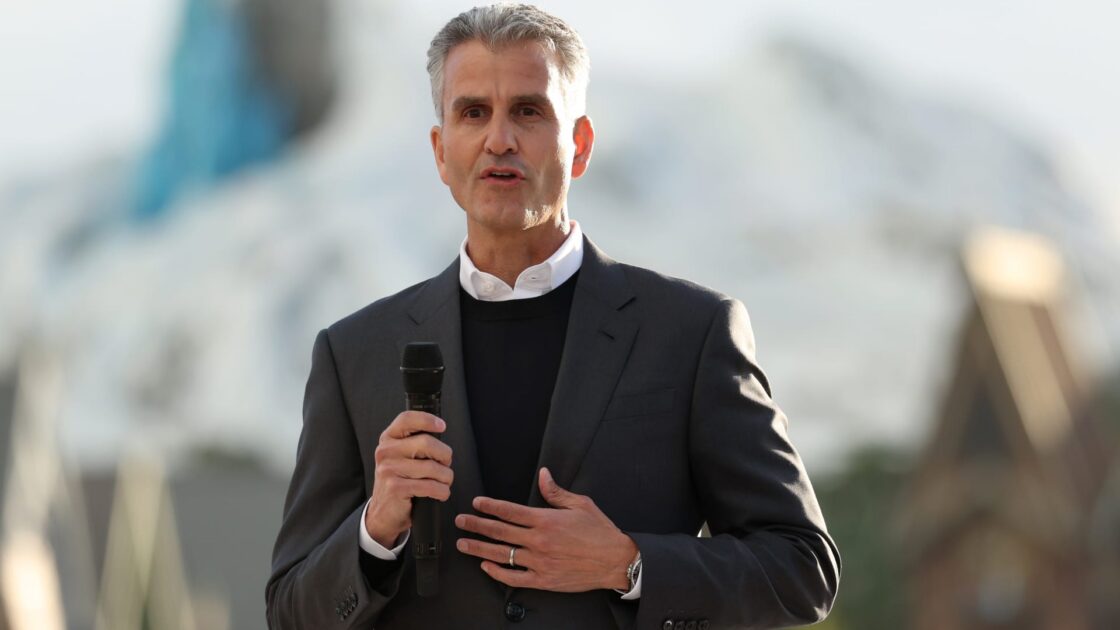
Disney CEO Josh D’Amaro told investors on the company’s earnings call that the job cuts are difficult because they affect people who care deeply about Disney, but noted they are important to help the company move faster, adapt to a rapidly changing environment, and keep investing in content and technology. The cuts will help Disney fund its $26 billion in projected content spend for fiscal 2027, a 9% increase from fiscal 2026.
Fourth-Quarter Financial Results
Disney reported net income for the fiscal fourth quarter of $2.61 billion, or $1.51 per share, compared with $1.31 billion, or 73 cents per share, during the same period the year prior. Adjusting for one-time items, including severance and other restructuring charges as well as the value of intangible assets, Disney reported adjusted earnings per share of $1.77, beating Wall Street’s expectation of $1.67 according to LSEG. Revenue for the quarter reached $25.95 billion, surpassing the $25.18 billion expected by analysts and marking a 16% increase year over year.
The company will increase its annual dividend to $2 a share, a 33% increase from the previously declared dividend, payable in two installments of $1 per share in January and July. Disney is also forecasting double-digit growth in earnings per share in the next fiscal year, alongside segment operating income growth of around 8%, with the majority concentrated in the first half due to the theatrical debut of “Avengers: Doomsday” and the Super Bowl.
Parks, Streaming, and Sports Performance
Disney’s experiences segment, which includes theme parks and cruises, reported nearly $10.11 billion in revenue, up 15% year over year, with operating income rising 20% to $2.25 billion. Johnston stated that lagging international attendance at domestic parks was offset by domestic visitors, especially at Walt Disney World. Growth at Disneyland Paris was driven by investments like the World of Frozen expansion, while attendance at Hong Kong and Shanghai parks remained soft due to regional economic challenges.
The entertainment division saw revenue increase 17% to $11.89 billion, with operating income nearly doubling to $1.33 billion. Streaming revenue specifically rose 19% to $6.1 billion, aided by an extra week on the fiscal calendar, subscription fee growth, and theatrical distribution revenue from titles such as “Toy Story 5.” Meanwhile, the sports division reached $4.61 billion in revenue, a 16% increase, while operating income surged more than 50% to $1.39 billion, fueled by subscription and affiliate fees alongside higher advertising revenue.
Technology and Artificial Intelligence Initiatives
D’Amaro has made advancing technology a pillar of the company’s growth strategy, having hired Karandeep Anand as chief technology officer in September. Disney announced a partnership with Adobe earlier this month to develop generative artificial intelligence models. D’Amaro told investors that the team is exploring ways to use AI to make booking trips easier, highlighting a vacation planning tool currently in beta at Walt Disney World built with Google partners that acts as a personal concierge for guests.
The company expects operating income for the experiences segment to grow in the high-single digits in fiscal 2027, and anticipates similar high-single digit growth for the entertainment division and double-digit growth for its sports division.