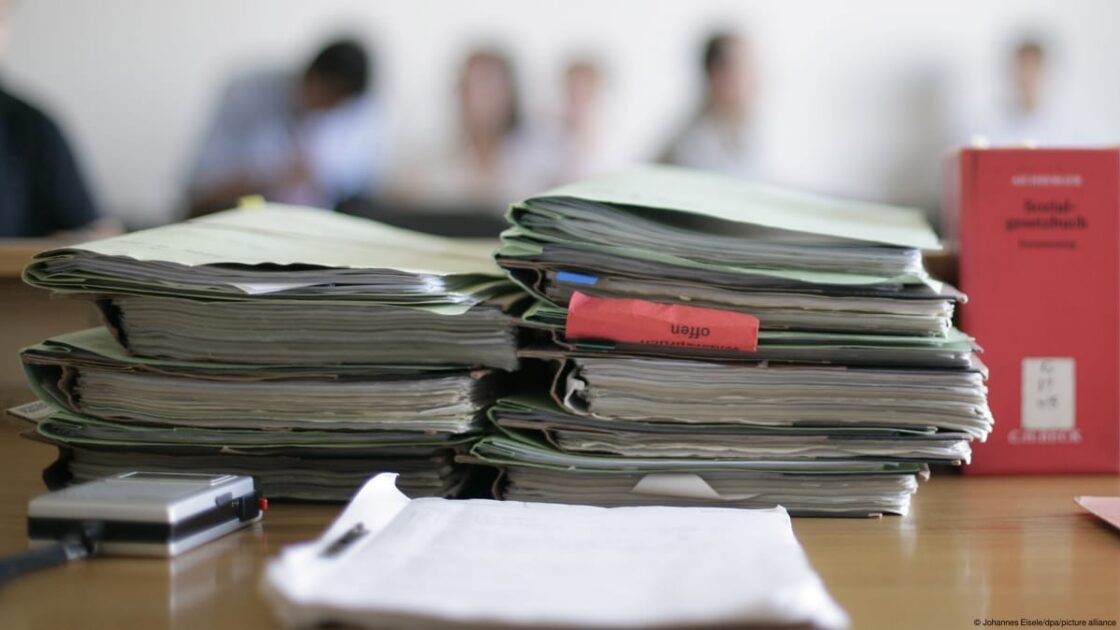
German courts are reporting a significant increase in lawsuits and complaints, with officials attributing the surge to the use of artificial intelligence models. The issue heavily impacts social courts, where citizens can file complaints without legal representation regarding unemployment benefits, health insurance contributions, and other social welfare matters.
The Rise in Cases and Identifying AI-Crafted Filings
Marcus Howe, a Berlin state social court judge and spokesperson, told Deutsche Welle that his court is managing 28% more cases this year compared to 2025. He noted that while the rise is largely tied to artificial intelligence, it may also stem from stricter federal unemployment benefit sanctions introduced this year. Other regions show similar trends, as North Rhine-Westphalia saw urgent proceedings across eight social courts jump from around 1,400 in the first quarter of 2025 to 3,600 in the same period of 2026.
Howe told Deutsche Welle that judges can usually spot AI-generated complaints at first glance due to different fonts and layouts, adding that they are often overly long and bloated with irrelevant content. He explained that the impersonal nature of these documents makes it difficult to discern the actual human problem behind the case.
Friedrich-Johannes Graf von Pfeil, president of the social court in Potsdam, Brandenburg, told Deutsche Welle he encountered a complaint stretching to 800 pages. He stated that these filings use specialist legal terminology ordinary citizens would not know, featuring minimal factual details and extensive legal interpretation that requires judges to review all material, including hallucinated references to other rulings.
Von Pfeil added that courts cannot easily employ internal AI tools to summarize these files due to security, data protection regulations, and sensitive medical documents that cannot reside on external servers.
Debating Solutions and Potential Court Fees
During a recent conference, federal and state justice ministers agreed to establish a working group to address the challenge, with conservative ministers proposing fees for urgent complaints. Christian Heinz, the Christian Democrat justice minister in Hesse, suggested evaluating a €15 ($16.40) fee, alongside a proposal to charge court costs for lawsuits deemed abusive or unlikely to succeed.
Holger Lange, head of the federal legal department for the social welfare association VdK, strongly opposed these ideas, telling Deutsche Welle that vulnerable individuals must retain barrier-free access to social courts without financial fear. Instead of building walls, Lange suggested streamlining digital access through online portals featuring clear questions and word limits. Howe also expressed skepticism regarding fees, noting that social courts traditionally maintain low entry thresholds to keep justice accessible, though von Pfeil considered a fee worth trying despite potential increases in legal aid bureaucracy.
Analysts point out that despite the recent uptick, pending cases across social courts previously dropped from over 445,000 at the end of 2017 to 325,000 at the end of 2024, driven by broader economic conditions and legal shifts.
Lange concluded that the recent increase may reflect previously hidden demands for legal protection from people who previously hesitated to claim their rights. While acknowledging that AI errors and hallucinations mean these complaints cannot always be trusted, Lange emphasized that the technology does not invalidate an appeal, noting that severely ill or care-dependent individuals may be behind the filings.