Nigerian President Bola Tinubu stated that the presidential villa experiences electricity and water outages similar to those faced by everyday citizens. He revealed that he experienced a water disruption while shaving at the presidential compound, known as Aso Rock, in Abuja.
Addressing Infrastructure Challenges
Tinubu shared the incident on Sunday during a special prayer gathering organized in his honor by his family members in Lagos. Speaking about the difficulties at Aso Rock, he noted that utility issues reach the presidential residence as well. He vowed that his administration will correct the problems, emphasizing that the country has only just started its development work.
Aso Villa functions as both the official office and residence of the Nigerian president, located at the base of Aso Rock in Abuja. Last year, the government allocated 10 billion naira, equivalent to about £5.5m or $7.2m, in the budget to install a solar mini-grid at the villa to combat surging electricity costs and unstable power supplies. Reports indicate the solar project is finished and undergoing testing, with intentions to decouple the facility from the national power grid entirely in the near future.
Broader Energy and Water Crisis
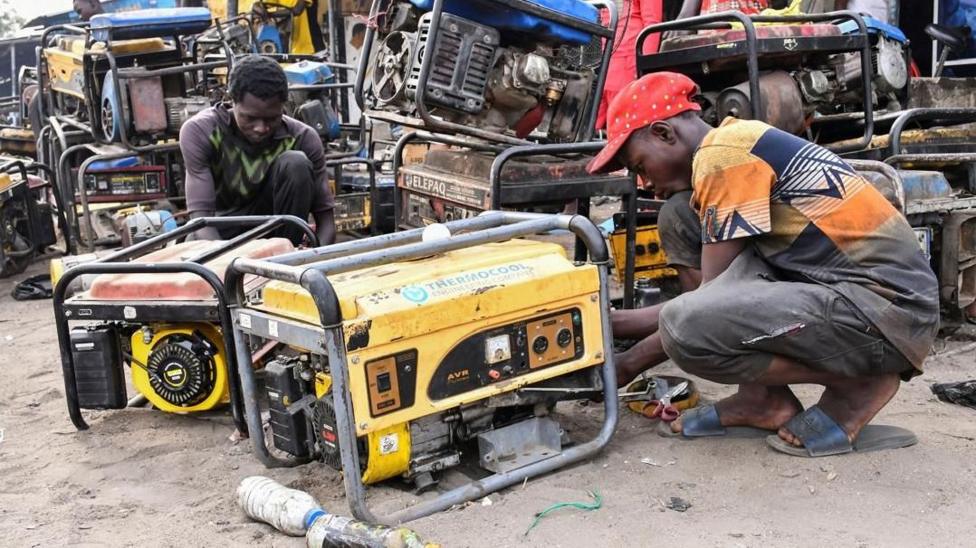
Nigeria continues to suffer from chronic electricity shortages, driven recently by inadequate gas supplies and dropping hydropower generation rather than standard nationwide grid failures. Continuous blackouts across Abuja, Lagos, and other regions have compelled distribution companies to enforce rotating power outages, heavily disrupting local households and commercial operations. The nation also faces widespread water shortages stemming from a structural divide between fast-growing urban populations and deteriorating public water infrastructure, leaving millions without dependable access.
Tinubu addressed voters regarding his previous campaign pledges ahead of the upcoming election on January 16, 2027, where he seeks a second term. During his 2022 campaign, he promised citizens adequate electricity and an end to estimated billing, challenging voters not to re-elect him if he failed to deliver without giving sufficient reasons. While blackouts persist, supporters highlight upgraded power access in rural regions and a recently approved $2bn investment for a new East–West Super Grid aimed at boosting transmission capacity as signs of progress.