Table of Contents
The Democratic Party has achieved the largest majority in the US House of Representatives since 1992 following a decisive victory in North Carolina. Democrat Chuck Hubbard successfully unseated Republican Representative Virginia Foxx in one of the tightest contests of the recent midterm elections.
Historic House Majority
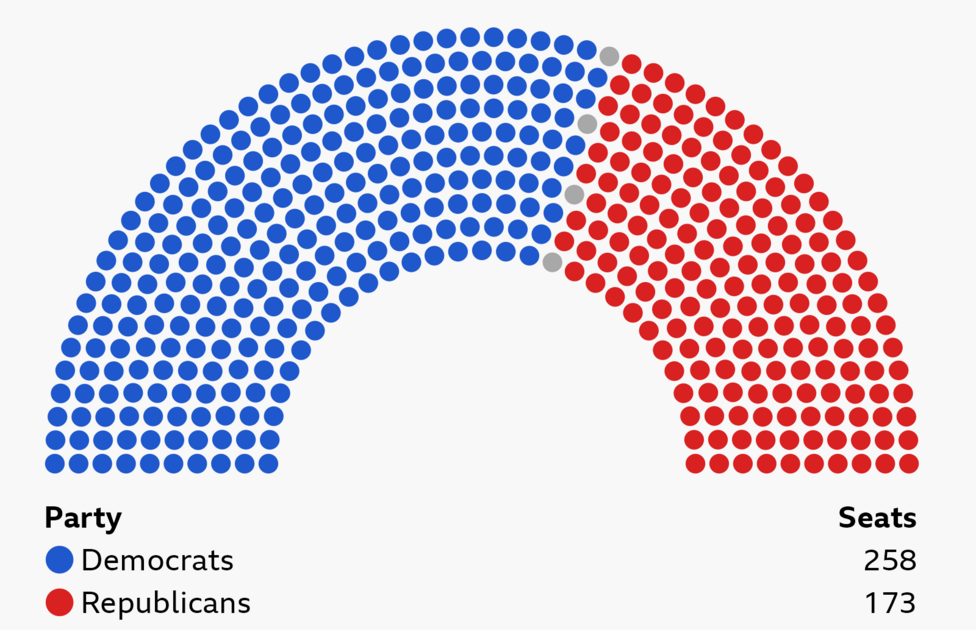
The race was officially called after Hubbard defeated Foxx by 330 votes with 99% of the ballots counted. With this win, Democrats have secured at least 258 House seats in the midterms compared to 173 seats held by Republicans, leaving four races still undecided. Neither party has reached this many House seats since Bill Clinton won the presidency in 1992, when Democrats also captured a total of 258 seats.
Sunday’s announcement followed a recount requested by Foxx, who has represented North Carolina’s 5th Congressional District since 2005. State law permits a recount when the margin of victory falls below 1%. Speaking to the BBC News Channel following his victory, Hubbard stated that voters wanted a change from the current political climate and pledged to work with fellow lawmakers to hold President Donald Trump accountable.
Writing on X earlier, Hubbard mentioned he had spoken with Foxx, noting that she graciously conceded after the recount process. Foxx released a statement expressing gratitude to her supporters after running a campaign centered on conservative values and common-sense solutions, despite falling just a few votes short.
Key Issues and Campaign Focus
Hubbard’s victory comes two years after he lost to Foxx by nine percentage points, and it follows several other Democratic triumphs in deeply conservative districts across South Carolina, Texas, Alaska, and Iowa. Like many Democratic candidates during the midterms, Hubbard concentrated heavily on the rising cost of living in the United States amid the conflict with Iran, which proved to be a primary concern for voters.
President Trump and Vice President JD Vance both indicated that inflation stemming from the war in Iran likely contributed to the Republican defeats. According to his campaign website, Hubbard’s legislative priorities include supporting working families and small businesses, backing public education, and broadening access to affordable healthcare.
Remaining Races and Future Power
Four House races remain uncalled, including contests in Tennessee and Minnesota, alongside two Louisiana elections heading to a December runoff. In Tennessee’s fourth district, Democrat Victoria Broderick holds a lead of fewer than 300 votes, while Democrat Jake Johnson leads by fewer than 500 votes in Minnesota’s first district.
With majorities in both the House and the Senate, Democrats gain the ability to pass legislation through Congress with ease and investigate conflicts of interest involving the president and his associates. The Senate also retains the authority to confirm or reject presidential cabinet and judicial nominations. However, their legislative power retains certain boundaries, as President Trump still holds the ultimate authority to veto any bills passed by Congress.