Table of Contents
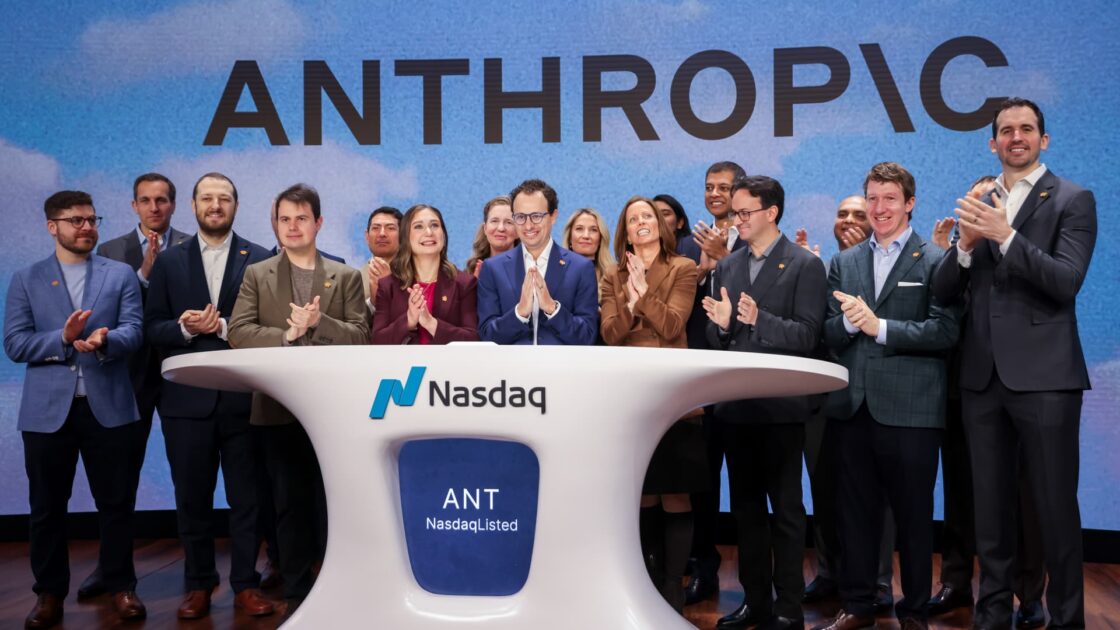
The initial public offering for Anthropic was a massive success in terms of deal size and pricing, driven by strong investor demand. However, the stock quickly faced the harsh reality of a stock market correction, highlighting widespread anxiety regarding artificial intelligence valuations.
Valuation Anxiety and Market Volatility
According to Avery Marquez, director of investment strategies at Renaissance Capital, the market volatility surrounding the artificial intelligence trade stems directly from concerns over valuations and whether the sector is in a bubble. Speaking on “ETF Edge” on Friday, Marquez noted that these fears were heightened by the Anthropic IPO, which finished its first week of trading down 9%. Because it is a new stock, valuation anxiety is much more prevalent as investors grapple with where the company should actually be valued.
The high valuation prompted unusual warnings in Wall Street research notes. Seaport Research Partners analyst Jay Goldberg wrote on Nov. 18 that Anthropic could develop autonomous AI systems that wipe out humanity, potentially leading to a serious decline in earnings.
Despite the challenges, Yuri Khodjamirian, chief investment officer at Tema ETFs, stated that pulling off such a large IPO in the middle of a severe market downturn for the tech sector was a significant achievement. Khodjamirian acknowledged that while investors must remain skeptical of oversubscribed figures, the successful offering amid tech trade volatility simply reflects day-to-day equities market realities.
Broader Tech Sector Selloff
Investor demand for artificial intelligence remains present, but it is accompanied by a reassessment of returns as market participants reposition for 2027. Khodjamirian explained that the market is currently in a vacuum, with investors taking risk off the table and waiting for clearer signals regarding Federal Reserve policy, geopolitics, midterm election results, and the AI trade. For Anthropic specifically, the revenue picture and the AI adoption curve will be vital metrics to watch.
The broader technology sector experienced steep declines, with the VanEck Semiconductor ETF dropping over 10% on Friday and heading toward its worst week since September 2001. Meanwhile, the S&P 500 technology sector recorded its worst weekly performance since the Covid crash, and Nvidia shares fell 14% on Friday.
Khodjamirian noted that while these semiconductor stocks may look cheap on a price-to-earnings basis after heavy selling, that assessment requires faith in future earnings estimates. For Anthropic, watching the annual recurring revenue number remains a key part of the puzzle.
Long-Term Price Discovery and Rivals
Marquez explained that hype always surrounds high-profile public debuts like SpaceX and Anthropic, making it difficult to determine whether pricing is based on fundamentals without time and price discovery. Comparing Anthropic to past disruptors, Marquez pointed out that Facebook did not perform well during its first year as a public company, while SpaceX shares remain below their first-day closing price months after going public.
All eyes will now turn to Anthropic rival OpenAI, which has suggested it may go public in 2027. Marquez suggested that the market’s reaction to the Anthropic deal indicates it was a wise decision for OpenAI to wait, build stronger financials, and improve fundamentals before facing a discerning market.
While Tema ETFs does not currently hold OpenAI shares, Khodjamirian did not rule out future possibilities if the asset fits a portfolio manager’s strategy. Demand from public market investors to access generational businesses prior to IPO day continues to grow, highlighted by BlackRock’s recent filing to launch an exchange-traded product combining ETF and interval fund structures for private company exposure.