Table of Contents
Israeli air strikes across the Gaza Strip have killed at least seven Palestinians, including a high-ranking Hamas security official, according to health officials and first responders. The strikes form part of ongoing military operations in the territory, where humanitarian conditions remain severe.
Senior Hamas Official Targeted
Naeem Abu Nahel, who headed the internal security service for Hamas, was killed in an attack in western Gaza City, as announced by the Hamas-run interior ministry. Israeli Prime Minister Benjamin Netanyahu and Defence Minister Israel Katz confirmed that the 50-year-old official was eliminated by the military. Abu Nahel had assumed the role in September following the capture of his predecessor during a raid by Israeli special forces.
Eyewitnesses reported that an Israeli drone struck Abu Nahel as he walked along a side street near a tent encampment for displaced individuals in Gaza City, leaving several others seriously wounded. The Israeli military stated that Abu Nahel held deep institutional knowledge within the internal security apparatus—tasked with enforcing discipline, securing infrastructure, and tracking informants—and that his removal severely impacts the organization’s management. The military added that he had promoted attacks against Israeli troops and civilians.
Conversely, the Gaza interior ministry claimed the assassination came on the heels of the security service achieving notable successes against criminal rings allegedly collaborating with Israeli forces in military-controlled zones.
Additional Strikes Across Gaza
Six other individuals died in two separate air strikes prior to the Gaza City attack. Health officials and first responders reported that three people, including a teenage boy, were killed in the Wadi Gaza region south of Gaza City. Three additional victims died at a police station located in the al-Mawasi area west of Khan Younis.
Gaza’s police force confirmed that two of its officers perished in the al-Mawasi attack and accused Israel of systematically targeting police infrastructure to foster disorder in the region. Meanwhile, the Israeli military maintained that it struck military operatives in both locations.
Humanitarian Crisis and Ongoing Conflict
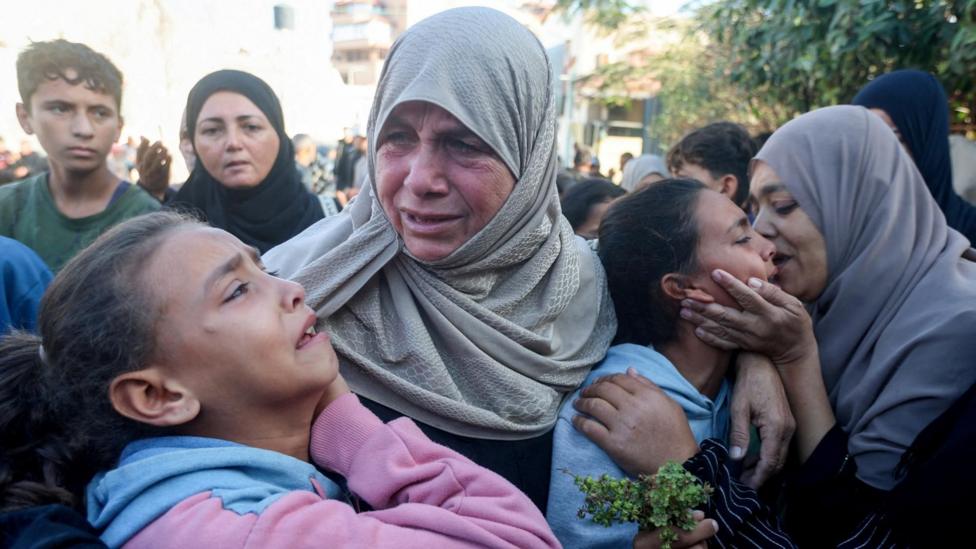
Hostilities have persisted in Gaza despite a US-brokered ceasefire agreed upon in October of last year. Daily Israeli strikes continue across the territory, which houses 2.1 million residents, the majority of whom are displaced. Local health authorities report that at least 1,679 people have died in Gaza over the past 13 months, figures deemed reliable by the United Nations, while Israel reports the deaths of six soldiers during the same timeframe.
The humanitarian situation has worsened due to recent heavy rainfall that flooded and damaged thousands of shelters for displaced families. The United Nations and humanitarian partners have urged Israel, which manages Gaza’s border crossings, to permit larger shipments of winter supplies such as tents, heaters, and water pumps, alongside critical medicines and vaccines.
The health ministry issued a warning regarding a sharp surge in meningitis infections, noting 272 cases in October alone, roughly eight times the standard monthly average. Total deaths from the infection reached 15 for the year, including five recorded between August and October. In response, the Israeli military agency Cogat stated it is coordinating a humanitarian response, presenting a newly approved package containing pumps, generators, water tankers, and medical supplies to UN agencies.
The broader conflict began following the Hamas-led assault on southern Israel on October 7, 2023, which resulted in about 1,200 deaths and 251 hostages. Since then, Israeli military campaigns in Gaza have killed more than 74,740 people, according to the local health ministry.