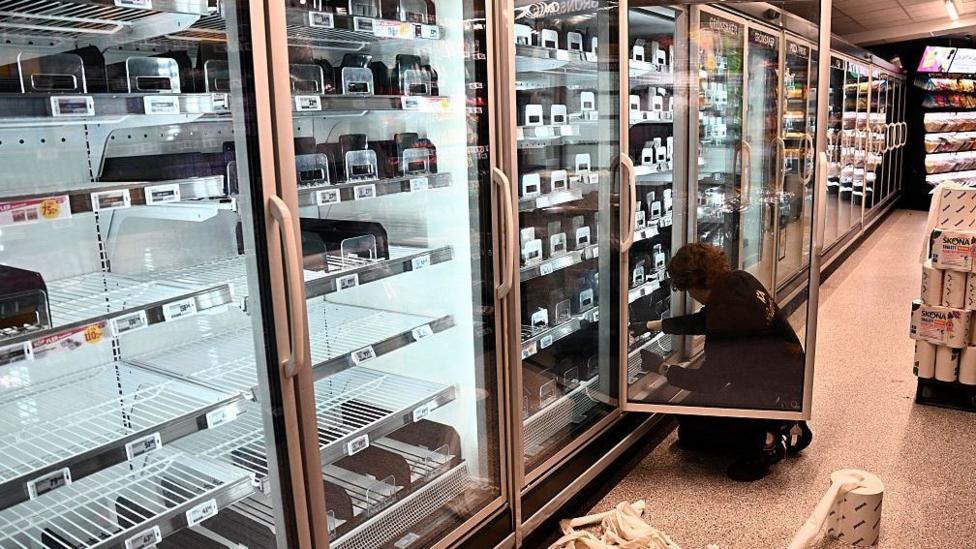
A covert cyber-security operation has successfully secured tens of thousands of commercial fridges and freezers across the United Kingdom. The initiative, which involved major supermarkets, warehouses, restaurants, and stadiums, was launched to prevent hackers from exploiting a critical vulnerability that has already caused significant food spoilage and financial damage elsewhere in Europe.
A Race Against Time
The security flaw was identified in late October by researchers at the refrigeration consultancy Omega Solutions. Experts from Pen Test Partners verified the risk and helped coordinate a response alongside the National Cyber Security Centre (NCSC), the Department for Environment, Food & Rural Affairs (Defra), and the Food Standards Agency (FSA). The BBC reports that the operation was kept secret to prevent hackers from discovering and exploiting the vulnerability before it could be patched.
During the campaign, thousands of devices controlling refrigeration units were disconnected from the open internet. In some instances, staff were instructed to remove internet cables and switch to manual temperature monitoring. An employee at one major supermarket chain told the BBC that their team worked to take hundreds of devices offline daily over the course of a week. “It did feel like a race against time as we were expecting another wave of these fridge hacks to come,” the worker stated, noting that a successful attack could have caused devastating supply chain disruptions and millions of pounds in spoiled inventory.
Global Context and Industry Response
The urgency of the UK operation followed three distinct waves of cyber-attacks on refrigeration systems this year. In August, US military bases were targeted, followed by a mid-October attack on hundreds of French supermarkets and food processing sites. A third wave in early November affected dozens of supermarkets across seven European countries, as well as some blood bank sites in France. While France has attributed one of these waves to Iran, Tehran has denied the allegation.
The UK-based units in question were manufactured by Resource Data Management (RDM). Ken Munro of Pen Test Partners explained that these controllers shared similar weak password vulnerabilities to the systems targeted in the European attacks. “There is so much extra attention on these ubiquitous bits of kit now that it was likely a matter of days until criminals or nation state hackers figured it out,” Munro said.
RDM has disputed the critical nature of the vulnerability, arguing that comparisons to the European attacks are unfair because accessing their hardware would require physical possession of the device. However, ethical hackers noted that the necessary hardware could be purchased inexpensively online. RDM CEO Ged Evans stated that the vulnerability was identified in a test environment that involved dismantling their hardware. “In any event we have acted at pace to address this issue and have already deployed first patch releases and have been in proactive contact with our customers to flag any issues and recommend mitigatory steps,” Evans said.
RDM confirmed that there has been no evidence of malicious activity targeting their controllers to date. The company continues to collaborate with the NCSC and other authorities to monitor the security of its systems.