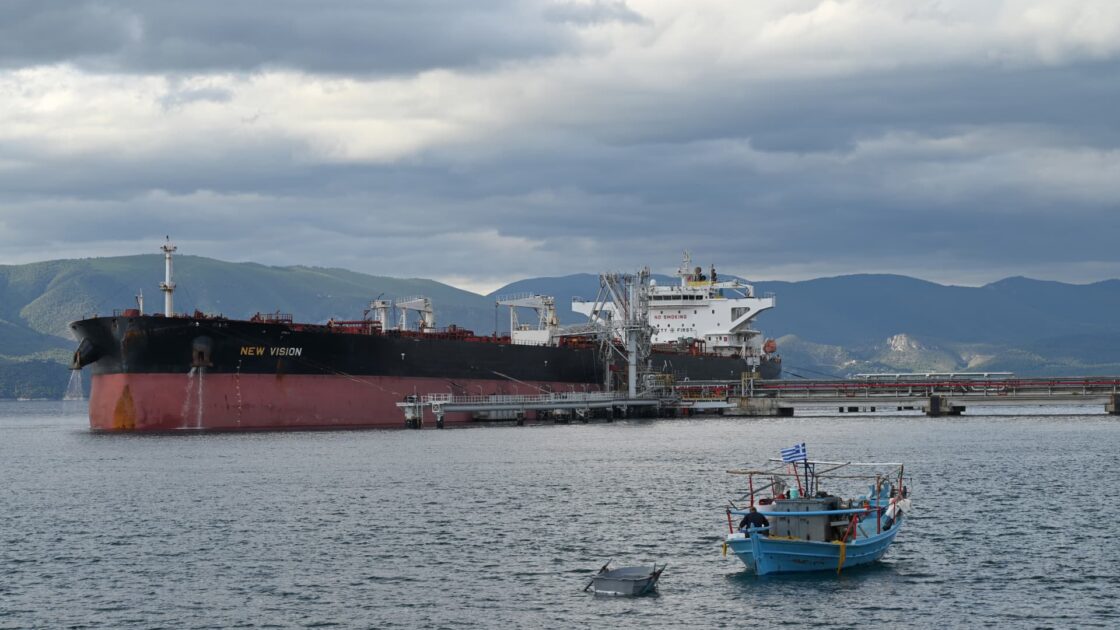
Crude oil prices have dropped sharply in November as investors anticipate a recovery in Middle East exports, which could push the market into a surplus for the first time since the onset of the Iran war. International benchmark Brent crude futures have fallen roughly 20% from late October wartime highs of $118 per barrel, while U.S. West Texas Intermediate has declined about 21% from over $104 per barrel. On Friday, Brent closed at $95.44 a barrel and WTI settled at $83.08, bringing U.S. retail gasoline prices well below $4 a gallon and diesel below $6 a gallon.
Market Outlook and Expert Projections
Investor optimism grew following the U.S. midterm elections after President Donald Trump refrained from launching new military strikes against Iran in the wake of Democrats winning congressional majorities. However, UBS strategist Giovanni Staunovo cautioned clients in a note that the recent selloff has likely gone too far. Staunovo stated that the market has become overly comfortable with the supply outlook and noted that the rebound in Gulf exports should not be mistaken for a true normalization of the oil market.
Several institutions forecast a crude surplus heading into the coming months. The International Energy Agency expects an oil surplus to begin in the fourth quarter, marking a major turning point after the Iran war caused the largest supply disruption in oil market history. Goldman Sachs projects a crude surplus of 2 million barrels per day in 2027 as Gulf producers adapt their supply chains, while Kpler estimates an oversupply of 3 million barrels per day next year. Bob McNally, president of Rapidan Energy and a former energy advisor to President George W. Bush, stated that continued recovery in the Arabian Gulf region will lead to oversupply.
Conversely, other experts remain skeptical about sustained surplus projections. David Goldwyn, who served as the State Department’s special envoy for international energy under President Barack Obama, dismissed the surplus forecasts by remarking that if pigs had wings, they would fly. McNally predicted that oil prices will trade in a wide range through the end of Trump’s term due to ongoing volatility in the Gulf, averaging between $70 and $80 during calm periods but spiking past $100 during escalations. McNally added that further disruptions and risks mean those surpluses will likely fail to materialize next year.
Export Realities and Geopolitical Risks
Although Middle East crude exports have rebounded since the summer, they have trended lower recently and remain far below pre-war levels due to near-daily attacks on tankers around the Strait of Hormuz. Maritime security agencies reported at least 20 attacks on commercial ships this month, following 35 incidents in October, which marked the highest level since the conflict began. Kpler data indicates that Middle East crude exports averaged 12.8 million barrels per day in the week ending Wednesday, roughly 24% below pre-war levels of 17 million barrels per day, while fuel shipments stood at 3.2 million barrels per day, down about 49% from 6.3 million barrels per day before the war.
Goldwyn noted that production has also increased in the Americas while demand has declined due to seasonal factors at the end of the summer driving season and refinery turnarounds. Based on a persistent surplus, JPMorgan forecasts Brent prices in the high $70s for the first half of 2027 before dropping into the $60s in the second half, while Goldman Sachs expects Brent to trade around $88 a barrel and WTI to average about $78 a barrel next year.
Despite these forecasts, Kpler warned that any predicted surplus could quickly revert to a deficit if Iran or Houthi allies target key infrastructure such as the UAE export terminal at Fujairah or Saudi facilities at Ras Tanura, Yanbu, or the East-West Pipeline. Goldwyn pointed out that any further supply disruptions would hit the market when global inventory buffers have already fallen to historic lows without time to restock, echoing warnings from the CEOs of ExxonMobil and Chevron regarding depleted oil stockpiles.
While the U.S. Strategic Petroleum Reserve has room to release another 100 million barrels and European nations could deploy more refined products, Goldwyn stated that both regions will be reluctant to draw on reserves merely for price relief if the situation becomes chronic. Meanwhile, Staunovo observed that China is increasing its crude imports amid the fragile Middle East situation, reversing Beijing’s earlier import cuts that had previously helped cap prices. Staunovo concluded that these combined developments are reducing oil on water and tightening the physical market, supporting the view that oil prices should recover from current levels.