Table of Contents
Comedian and TV presenter Paul Whitehouse has urged the government to intervene to save an at-risk fish species that has inhabited England’s largest lake since the end of the last Ice Age. Arctic charr have lived in Windermere within the Lake District for over 10,000 years, but campaigners warn the species faces extinction as sewage pollution, invasive competitors, and rising global temperatures damage its habitat.
Call for Urgent Government Action
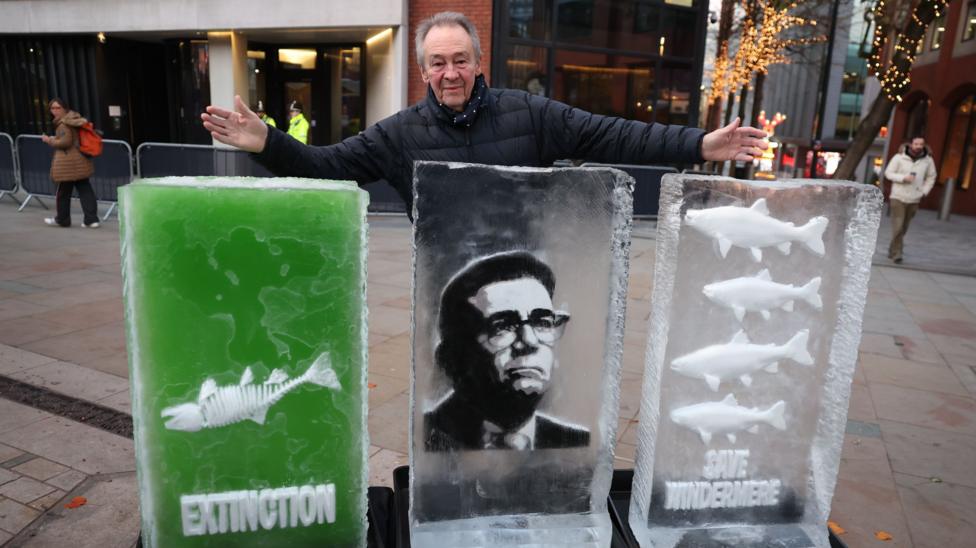
Whitehouse called on Prime Minister Andy Burnham to take action, stating that losing the species would constitute “a crime.” As reported by BBC News, the television presenter highlighted that the spawning grounds of the fish are smothered in algal sludge stemming directly from sewage pollution, emphasizing that swift government intervention is necessary.
To draw attention to the crisis, Whitehouse partnered with environmental campaigner Matt Staniek to unveil a 1.3-meter ice sculpture of the prime minister outside No 10 North in Manchester. Staniek is urging the prime minister to accelerate a £3.7 billion infrastructure project that features a large tunnel to divert sewage toward a modern water treatment facility.
The project was developed by the Only Rainwater In Windermere coalition, which includes United Utilities, the Environment Agency, the Lake District National Park Authority, the Love Windermere partnership, the Save Windermere campaign group, and Westmorland and Furness Council.
Scientific Warnings and Environmental Pressures
Fresh research from the Freshwater Biological Association indicates that Arctic charr are experiencing a severe decline and risk extinction without immediate intervention. The fish comprise four distinct populations in Windermere that spawn at separate times and locations without interbreeding, making them genetically unique compared to similar populations in other regional lakes.
According to the association, the quality of spawning habitats has dropped significantly since 2017 due to rising silt and algae levels, alongside an increase in introduced species such as ruffe, roach, and bream. Dr. Louise Lavictoire, head of science at the organization, stated that the data clearly demonstrates the possibility of losing Arctic charr from Windermere entirely, noting that the species faces multiple pressures requiring collective action.
Natural England’s Dave Ottewell characterized the fish as a remarkable living link to the end of the last Ice Age. Tim Duckmanton from the Lake District National Park Authority added that recent data collection has provided a clearer understanding of the dangers facing the species.
Responses from Authorities and Water Companies
United Utilities stated that safeguarding the area remains a priority and noted that £200 million is being allocated over the next four years to reduce storm overflow spills and upgrade wastewater treatment.
A spokesperson for the Department for Environment, Food and Rural Affairs stated that the government is actively working to decrease sewage discharges by deploying 33 new Environment Agency specialists to the area, boosting inspections, and establishing a regional water council to give local residents greater influence over decisions. The spokesperson added that upcoming water legislation will introduce stricter regulations and enforcement to hold water companies accountable for environmental standards.