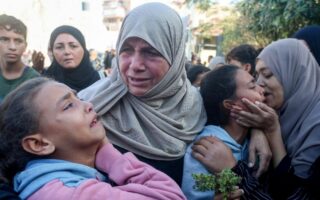
Eleven-year-old Alaa was tending her family’s goats with her siblings in a field behind their home in Umm Khuzaym, north-west Syria, on Sunday when a landmine detonated with a deafening blast. Her father, Walid Mohammed Al-Ghafar, told BBC News that he rushed outside after hearing screams to find his daughter killed and her 10-year-old brother, Mahmoud, seriously injured.
Rising Casualties Among Returning Populations
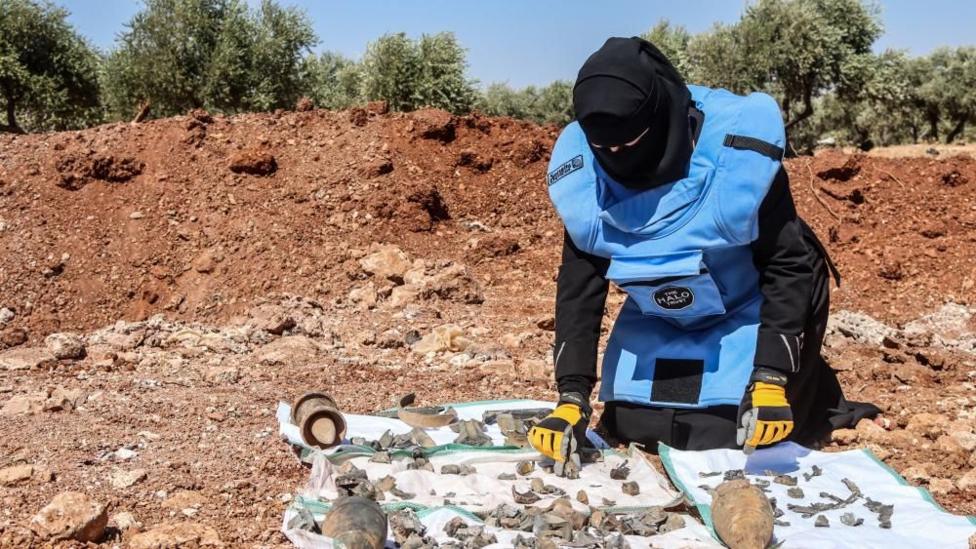
That tragedy and other recent incidents bring the number of children killed or injured by explosive ordnance in Syria to nearly 1,000 since the fall of Bashar al-Assad in December 2024, according to the UN Mine Action Service (Unmas). The village is among many where displaced families have returned to homes and farmland situated along former front lines of the 13-year civil war. Although demining teams had visited several times, giving residents the belief that the area was safe, remnants of war often lie scattered far beyond former battle zones without recognizable patterns.
Katrin Atkins, research lead at Landmine Monitor, told BBC News that the lack of patterns makes clearance extremely difficult. A report published on Tuesday by the International Campaign to Ban Landmines revealed that 1,602 people were killed or injured by landmines and explosive remnants of war in 2025 alone, marking a 50% increase from the previous year. Myanmar was the only nation to record a higher total, with 1,891 casualties.
The report links the surge in Syria partly to the large-scale return of refugees and displaced individuals. Atkins explained that casualties spike in areas shortly after population movements resume because people return and begin utilizing fields again. Simon Jackson, Syria programme manager for the Halo Trust, told BBC News that over 60% of casualties recorded by the charity involve farming, agriculture, or shepherding, noting that desperate people take risks rather than wait for clearance organizations.
Widespread Impact and Ongoing Threats
Since Assad’s fall on December 8, 2024, Unmas has tracked at least 1,556 explosive ordnance incidents resulting in 2,701 casualties, comprising 935 deaths and 1,766 injuries. Children represent approximately 37% of these victims, with 995 affected. Experts estimate that overall casualty figures could be under-reported by 25% to 50%.
Survivors face permanent and devastating consequences. Majid Abdul Rahman, 27, was riding in a vehicle through the Ghouta region near Damascus in March 2025 when it hit an explosive device. More than a year later, Majid struggles to walk and cannot work, leaving him unable to support his family. November alone saw at least 20 people killed and over 40 injured by explosive ordnance. Notable tragedies included a November 4 explosion in a Hasakah school courtyard that killed a 12-year-old and injured 19 others, alongside a Monday incident in southern Daraa province where a 13-year-old boy died from an unexploded cluster munition.
The contamination hampers Syria’s economic recovery by leaving agricultural land unsafe for cultivation and threatening individuals attempting to salvage scrap metal from abandoned zones. The Syrian Ministry of Defence reports that its teams have neutralized over 315,000 mines and unexploded munitions since late 2024. However, the absence of a nationwide contamination survey leaves the true scope of the hazard largely unknown, leaving Atkins to describe the situation as a black hole where the conflict continues to claim victims.