Brain-computer interface company Paradromics announced a partnership with Nvidia to utilize the chipmaker’s hardware and software for processing neural data. The collaboration aims to transform bulky speech-decoding equipment into portable devices that can significantly improve patient mobility.
Decoding Neural Signals
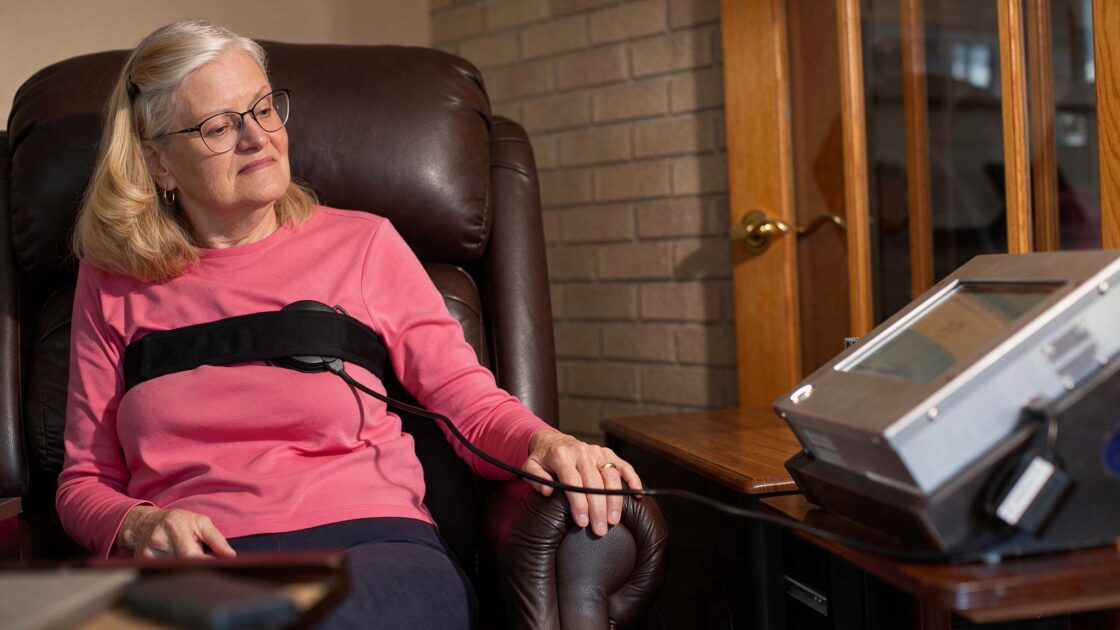
A patient named Mary has lost much of her speaking muscles, but neurons in her brain still fire when she tries to speak. The Paradromics implant utilizes over 400 embedded electrodes to capture those signals, while a computer uses artificial intelligence to infer what she wants to say. The words are then displayed on a screen and spoken aloud by the computer.
This decoding process currently requires immense computing power, relying on a cart full of electronics plugged into an electrical outlet. Paradromics CEO and founder Matt Angle explained to WIRED that the patient must stay within range of the cart, noting that brain-computer interfaces represent the ultimate case for edge computing. Angle stated that the company wants to process neural data through increasingly smaller and lower-power devices led by Nvidia.
Shrinking the Technology
Paradromics plans to use Nvidia’s Jetson, a low-powered computing module, to enable speech decoding inside a small device placed near the user. The company will also utilize Holoscan, Nvidia’s AI sensor processing software, allowing users to interact with computers and other devices with minimal lag time. David Niewolny, Nvidia’s director of business development for health care and medical, told WIRED via email that brain-computer interfaces must translate complex neural signals into meaningful actions in real time.
Reducing lag time is essential for a speech function so users can converse naturally without frustrating delays. Niewolny noted that neural signals change over time, requiring AI that continuously adapts to the individual.
Through this partnership, Paradromics can integrate Nvidia’s foundation models into its brain-computer interface. Vikash Gilja, chief scientific officer at Paradromics, stated that AI models could make synthesized voices more expressive and human-like while allowing local operation on Nvidia hardware without an internet connection.
Niewolny stated that he sees tremendous potential for AI to expand human capability and mentioned that Nvidia is also working with other brain-computer interface companies, such as Synchron. He added that the chipmaker will not have access to any patient brain data through these partnerships.