Table of Contents
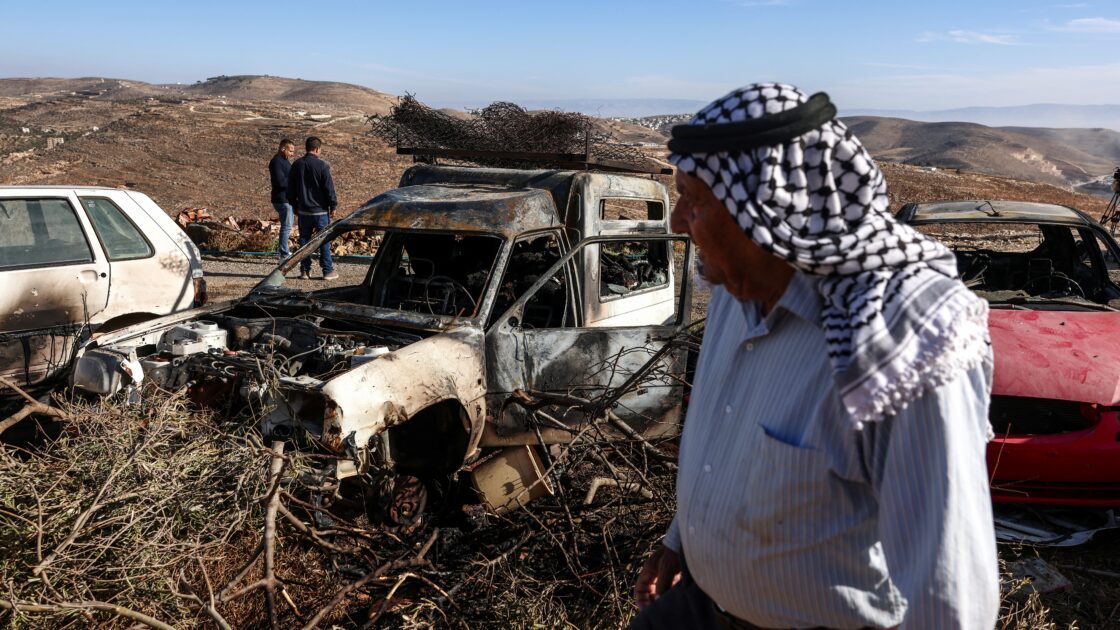
Israeli settlers set fire to at least a dozen vehicles and several homes across five Palestinian villages in the occupied West Bank over the weekend, leaving behind spray-painted messages reading “Revenge” and “Greetings from Susya”. While police stated they had opened investigations into the incidents, local media reported that no arrests had been made, even as settlers mocked the organised violence in chat groups ahead of the Hanukkah festival.
Violence and Restrictions Across the West Bank
The weekend arson attacks compounded a broader surge in settler violence that has severely restricted the seasonal olive harvest. According to a United Nations Humanitarian Country Team report, more than 400 attacks resulting in casualties or damage have occurred since September, targeting activists, journalists, and diplomats. Incidents over the recent period included settlers shooting a man in the abdomen in Nabi Saleh, beating a farmer in Abu Njeim, slashing journalists’ tyres in Beitillu, and a civilian security coordinator shooting a 42-year-old man dead near the Beit El settlement perimeter wall.
Movement restrictions also intensified as settlers cut power lines, blocked access roads, and pelted cars with stones under military protection, while soldiers closed roads around Hebron and sealed Hizma overnight. Agricultural livelihoods suffered extensively, with locals and the Wafa news agency reporting bulldozed olive trees, destroyed groves, and cut water lines. The UN Office for the Coordination of Humanitarian Affairs noted that more than 4,000 trees and saplings have been damaged during the current harvest, alongside tens of thousands of kilograms of vandalized or stolen produce.
Meanwhile, Israeli forces and Civil Administration officials demolished structures in Khirbet Samra in the northern Jordan Valley, including essential drinking water tanks, without providing demolition orders. In Hebron, the army posted demolition notices on two multi-apartment buildings, and the Office of the State Attorney acknowledged that a recent home demolition in Kafr ad-Dik, which violated a High Court freeze, was the result of human error. In parallel developments, settlers established a yeshiva in Area A near Yasid as a satellite campus to the Homesh outpost, and land levelling began in Kharas for a new industrial zone after over 500 dunams were declared a closed military zone.
Gaza Death Toll and Humanitarian Crisis
In Gaza, the Ministry of Health reported that the death toll rose to 74,746 since October 2023, with deaths climbing following the October 2025 ceasefire. Israeli tanks and bulldozers crossed the Yellow Line in central Gaza in a ground push intended to destroy a tunnel, prompting thousands to flee ad-Dawa, Bureij, and Nuseirat before troops withdrew the following day. A Palestinian security source told Al Jazeera that Israeli-backed anti-Hamas groups pressured families to leave during the operation.
Targeted strikes and ongoing military actions continued to claim lives, including a drone strike on a meal-carrying van in Gaza City that killed three people, though the Israeli army claimed the victims were Islamic Jihad members. Health officials warned of an out-of-season rise in meningitis linked to damaged sewage networks, resulting in 12 deaths at Al Shifa hospital, where medical gowns and fabrics have completely run out. Additionally, a child died from lead poisoning caused by families repairing old batteries inside tents due to an ongoing ban on new battery imports.
Political Fallout and Coalition Talks
The West Bank arson attacks triggered unusually sharp condemnation from Prime Minister Benjamin Netanyahu’s political rivals, with former army chief Gadi Eisenkot labelling the incidents “Jewish terrorism in every sense of the word” and blaming far-right ministers Itamar Ben-Gvir and Bezalel Smotrich. Former Prime Minister Naftali Bennett accused the government of enabling the violence, and Yair Lapid described the events as pogroms. These domestic criticisms coincided with international measures, including asset freezes by Britain on eight Israeli settlement firms and Australian sanctions targeting settlers and their organisations.
The unrest complicated ongoing coalition negotiations between Netanyahu’s Likud party and Eisenkot’s Yashar party, which ultimately ended without a deal over leadership terms and Ben-Gvir’s potential inclusion in the new government. Ben-Gvir dismissed Eisenkot’s condemnation as a political concession, while Yesha Council chair Israel Ganz condemned the arson but argued the term “Jewish terrorism” tarnished Israel. Amid the political deadlock, Foreign Minister Gideon Saar promised countermeasures against extremists, and the attorney general froze the E1 settlement tender until a new government is sworn in, while Eisenkot indicated he might seek outside support from Arab parties to form a minority government if broad coalition efforts fail.