Table of Contents
During the Jim Crow era, Black travelers driving along Route 66 faced widespread discrimination, as most restaurants, gas stations, and motels refused to serve them. However, a family-owned business in Oklahoma provided a rare sanctuary, serving as the only known Black-owned and operated gas station along the historic highway.
A Safe Haven During Jim Crow
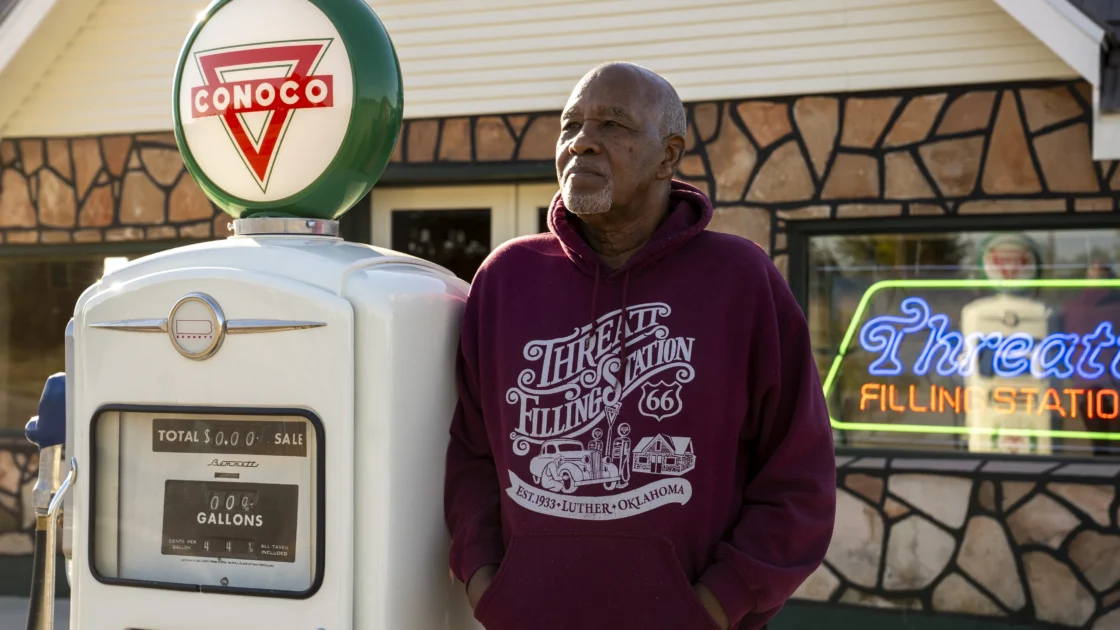
Located just east of Oklahoma City in Luther, Oklahoma, the Threatt Filling Station offered fuel, food, and overnight lodging to travelers who had to pack their own supplies due to widespread segregation. Linda Fisher, the granddaughter of station founder Allen Threatt Sr., told NPR that her grandparents took care of whatever visitors needed, whether it was food, shelter, or blankets.
Allen Threatt Sr. relocated from Alabama to Luther during the early 1900s as part of the Great Migration. His father had been born into slavery, and Threatt and his wife, Alberta, sought stability by acquiring farmland. At that time, Oklahoma offered opportunities for Black migrants to purchase land, leading to the establishment of more than 50 all-Black towns between 1865 and 1920.
Despite these communities, Oklahoma also saw a rise in “sundown towns”—all-white municipalities where non-white individuals faced violence or police harassment after dark. Fisher noted that sundown towns flanked the Threatt Filling Station on both sides during the Jim Crow era, yet everyone was welcomed at her family’s property.
Growth and Decline of the Historic Station
Allen Threatt Sr. constructed the initial filling station in 1915 after observing motorists passing his land on the Ozark Trail. When Route 66 was established in 1926, vehicle traffic surged. Following a fire that destroyed the original wooden structure, Threatt rebuilt it using sandstone in the style of a welcoming home.
The surrounding property developed into a vibrant community center, hosting dances, social club meetings, barbecues, and baseball games played by Negro League athletes. Allen and Alberta Threatt raised 11 living children, and several family members managed the station through the 1950s.
Traffic along Route 66 declined significantly following the construction of the Interstate Highway System under the Eisenhower administration, leading to the station’s closure by the mid-1970s.
Restoration and Future Plans
Decades later, the abandoned building fell into disrepair, prompting the National Trust for Historic Preservation to name it one of America’s 11 Most Endangered Historic Places in 2021. In response, three of Allen Threatt Sr.’s grandchildren initiated restoration efforts a few years prior.
Supported by nonprofit grants and family labor, the exterior of the filling station has been fully restored. The site now features 1940s ceramic Conoco gas pumps, informative interior displays detailing family and highway history, and merchandise for visitors.
The family ultimately plans to develop an RV park, a restaurant, and a new baseball diamond on the 150-acre property.
“We have this property today because of Grandpa, and so we represent him, we represent our mothers, our fathers,” said Edward Threatt, a grandchild leading the restoration, as reported by NPR. “And we’re just trying to do them proud, that’s all.”