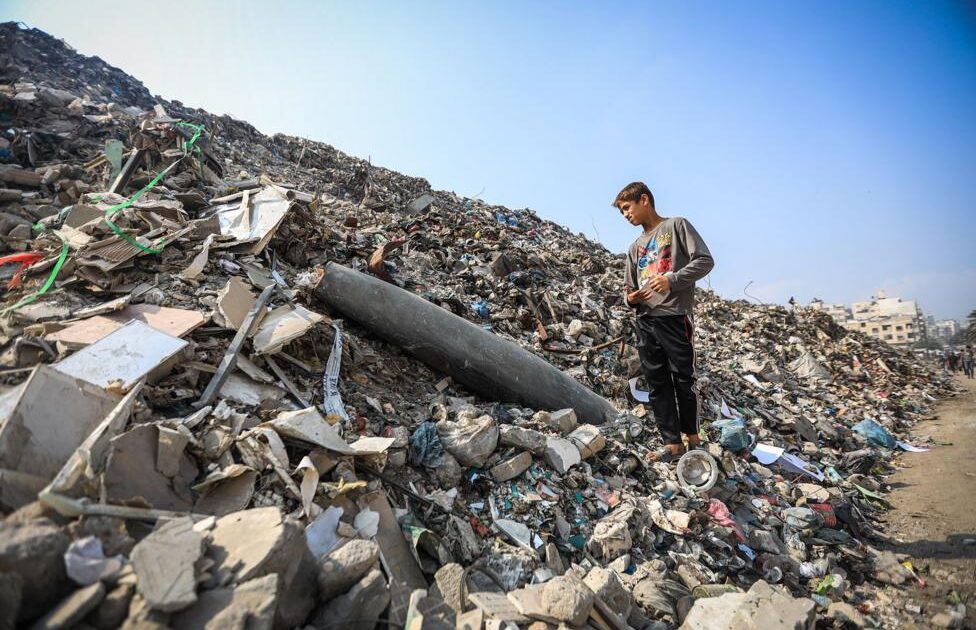
Gaza has transformed into a toxic wasteland following military attacks that left over 99% of the Palestinian territory showing signs of environmental contamination, according to a report by Oxfam. Heavy metals, explosive residues, asbestos, and biological contaminants present immediate and long-lasting threats to the population.
Environmental Destruction and Health Risks
Oxfam International Executive Director Amitabh Behar accused Israel of environmental war crimes amid an ongoing genocide in Gaza, stating that the destruction has fundamentally degraded conditions necessary for human survival. The Israeli government was asked to respond to the report, having previously rejected genocide accusations at the International Court of Justice as baseless while maintaining its military campaign is self-defense against Hamas.
The research was conducted by Oxfam alongside the UK-based Conflict and Environment Observatory using satellite imagery and open-source data. A UN special rapporteur noted that over 200,000 tonnes of explosives were dropped on Gaza, while the UN Environment Programme estimated that military operations generated more than 61 million tonnes of debris.
Report author Lama Abdul Samad told BBC News that persistent environmental contaminants will cause chronic health issues, including respiratory diseases, cancers, organ damage, birth defects, and stillbirths. With all six wastewater treatment plants non-operational, untreated sewage flows into groundwater and the Mediterranean Sea, a situation worsened by winter storms mixing rainwater with sewage in displacement tent sites.
Impact on Daily Life and Livelihoods
Testing contamination levels remains difficult due to destroyed laboratories in Gaza and Israeli restrictions on importing specialist testing equipment and scientists. BBC News approached the military for comment, while the UN Environment Programme noted that security concerns previously prevented its staff from traveling to the territory.
Local doctors report rising rates of acute respiratory infections from dust and pollution, alongside a five-fold increase in chronic skin diseases linked to environmental pollution and unhygienic living conditions in camps, according to Palestinian dermatologist Dr Alaa Abu Hajar. Fishermen and farmers also report that soil and sea pollution prevents them from producing safe food, with fisherman Abu al-Abed Sultan stating that nets regularly catch rubble and garbage.
The conflict has resulted in at least 74,746 Palestinian deaths, according to health ministry figures considered reliable by the UN, amid dire humanitarian conditions. Israel has conditioned large-scale reconstruction on the full disarmament of Hamas, though proposals have faced political deadlock.